Another Successful IB Year

Share this article

Another Successful Year for ECP Students at IB

We are pleased to report an excellent set of IB results again this year. A total of 75 ECP students sat the IB exams in May, achieving an average of 34. This is four points more than the world average of 30, out of a possible 45. Very impressively, 30% (23) of ECP students scored 38 points or more. 38 is usually the minimum entry requirement of the world’s top universities. In addition, 16% (12) achieved 40 points or more.

Maximum points

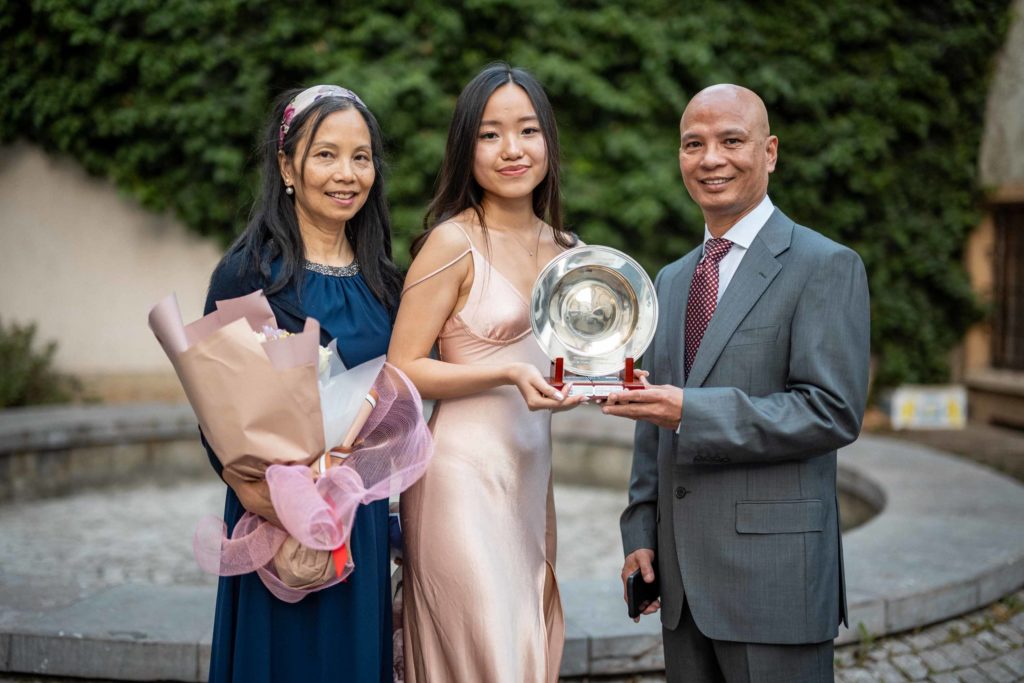
One student in particular has good reason to be very pleased with her results. Lily Huong Mac is one of those very rare students who achieved the almost impossible maximum score of 45 points. Only around 1% of students worldwide manage this very exceptional result.

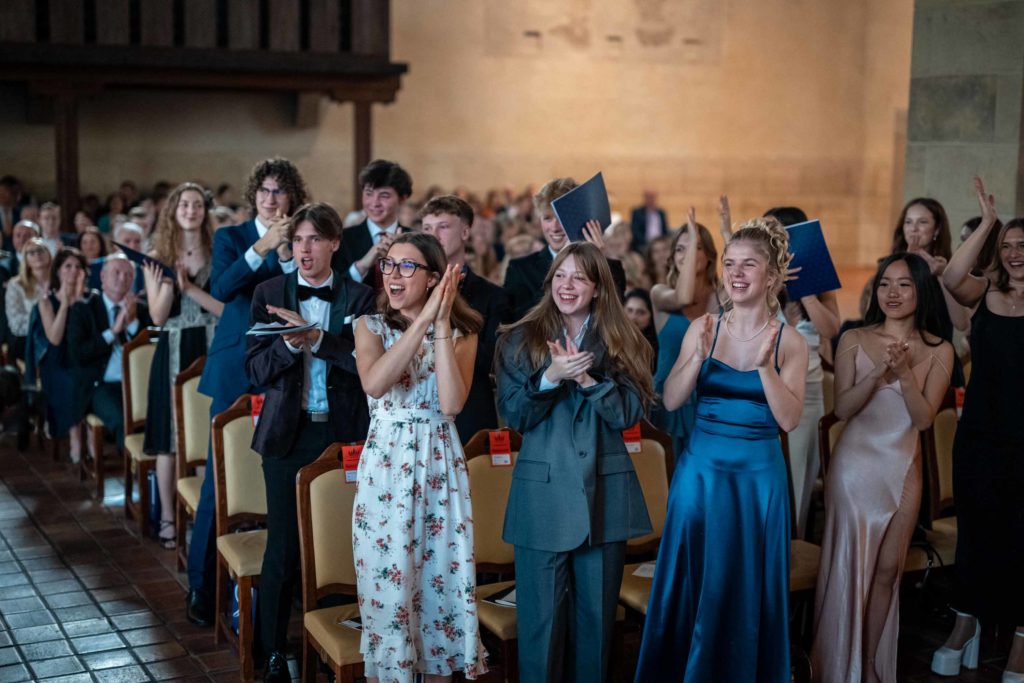
At our Graduation Ceremony in Betlémská kaple, Lily won not only the Professor Helena Illnerová Prize for Biology and the Psychology Prize, but also the coveted Chairman of Governors’ Prize for Academic Achievement. In the citations for these prizes, Lily was lauded as “embodying the essence of a ‘renaissance’ student, excelling in diverse disciplines from science to art, showcasing a rare blend of talent and diligence.” She was described as “having an insightful and analytic understanding of human behaviour”. It is therefore very apt that she has chosen to study Psychological and Behavioural Sciences at the London School of Economics.

University Destinations

But as well as Lily’s place at LSE, ECP students will be starting the new academic year at many other outstanding universities. They are bound for the UK, the Netherlands and elsewhere in Europe as well as the USA and Canada. 17 will be heading off to the UK to attend top Russell group universities such as LSE, UCL and Edinburgh. 6 are embarking on courses at excellent North American institutions such as UBC. The Netherlands continues to be a popular destination, with 25 students opting to study a wide range of courses at UvA, Groningen and Leiden. Another 12 students will be attending universities in Germany, Denmark, Italy, Spain and Austria. Finally, 13 will be staying in the Czech Republic to study courses including Medicine and Law at Charles University.

We offer ECP’s Class of 24 our hearty congratulations on their results and every success in their future studies and careers.

ECP IB results


ECP’s First Headmaster Remembered – Hubert Ward OBE

Share this article

Dr Brown recently attended the funeral of the English College’s first Headmaster. He, along with several of our Governors, welcomed the opportunity to express their condolences on behalf of the ECP to Hubert’s widow, Judy, and his children.

Principal-elect

Hubert Ward OBE was appointed Principal-elect of the yet-to-be-opened English College in Prague in 1992. He and his first wife, Elizabeth, took on the daunting task of establishing a new school in a far away country. Hubert was eminently well-qualified for the role. As Founder Governor Ann Lewis wrote in her first history of the College, Old Roots, New Shoots:

“He had taken over as Head of King’s School, Ely, when it was at a low point in its long history and made it into an excellent school. He had wide experience, including teaching at Geelong Grammar School in Australia. He had remarkable energy and combined being a Head with an unusual range of other activities, including being a Magistrate, a Church Reader, a Member of Cambridgeshire County Council, and of a number of Governing Bodies including Frensham Heights school.”

It was Hubert who organised the transformation of our building in Vysočany. He turned it from an empty building, abandoned to enable the construction of the Metro station, into a functioning secondary school. He also navigated our registration as a Czech school with the Ministry of Education. He recruited the staff, and most importantly, inspired the first students and their parents to take a huge leap of faith and sign up for a different sort of education.

As one of ECP’s first students said:

“It was the Wards (Hubert and Elizabeth), whose humane and very warm approach made my mother believe that the ECP building under reconstruction would provide her son with the best education possible and that the very high school fees would somehow pay off in the future…

And it was also the Wards and their kind eyes and voices, who made me in April 1994 believe that I should perhaps learn that terribly illogical language called English and not go to the German college as I had been hoping for.”

Tomáš Pospíšil, who graduated from the ECP in 1999, is now Deputy Head of Mission – EU Delegation to Uruguay.

A Different Education

Back then, Prague was a very different place. Czechoslovakia had just emerged from 40 years of Communism and was keen to take its place in a democratic Western Europe. ECP’s Founders wanted to establish a school in the tradition of the old Prague English Grammar School. It would be British in style and ethos, but offering the International Baccalaureate to give young Czechs the opportunity to study at the best universities around the world.

Tribute

Dr Brown says: “Hubert Ward guided us through those first two, challenging, years and built a solid foundation for all that was to follow. I am sure he would have been delighted to know that we have just begun construction work on developing the site he first acquired for us.”

Founders’ Days

Having established the school, Hubert took a well-deserved second retirement. However, he continued to follow our progress with interest and we were delighted to welcome him back on several occasions, including Founders’ Day on the 20th anniversary in 2014 and the 25th anniversary in 2019.

ECP’s First Day

In his speeches on those Founders’ Days, Hubert reminisced about the first day the ECP opened, on 4 September 1994. He shared the speech he made at the time. There is no better way to reflect on the journey that the English College has made over the past 29 years than to read his words to the 117 students who walked through the iconic blue doors for the very first time on that day. 

We will always remember the very important part Hubert Ward played in the history of the English College. We are therefore pleased to announce that the Headmaster’s Prize for Service to the School is to be re-named the Hubert Ward Prize for Service to the School, by kind permission of his family.

Hubert Ward’s speech at ECP’s very first assembly

“I am delighted to welcome you all here today, the first full day of the English College.

We stand on the brink of a great adventure. Sixty nine years ago, a school was established in this country, a school dedicated to the proposition that all children are born equal and all deserve a good education. That school survived a World War and did not close until this country descended into forty years of darkness. We are here today to re-establish the traditions of the former Prague English Grammar School.

We must also remember the long tradition of independent thought established in this country by people such as Hus, Komensky, Palacký, the Masaryks, Beneš, Dubček and Havel. This is a proud tradition, second to no other country in Europe. It is for us here today to pick up, and to pass on, that tradition. It is for us here today, Czech and ex-patriate alike, jointly to resolve that this new English College, founded by a combined venture of Czech and British people, shall have a new birth and that education of the people, by the people, and for the people shall be freshly established, and shall endure.

Today we begin to build a school which may help to light the way not only for the people of the Czech Republic but also for all the peoples of Europe as this continent once again moves towards a unity it last enjoyed at the time of Charles IV. Every one of us here this morning has a part to play in this challenge. Everyone of us here this morning can help to turn this dream into reality. I wish all of you, teachers and pupils alike, every success in your future. I have quoted freely from Abraham Lincoln in the Gettysburg Address. I want to finish by quoting three simple words by Winston Churchill: All I want to say to you is “Go to it!“ – and God be with you.”

 

His Majesty King Charles III continues as ECP’s Patron

Share this article

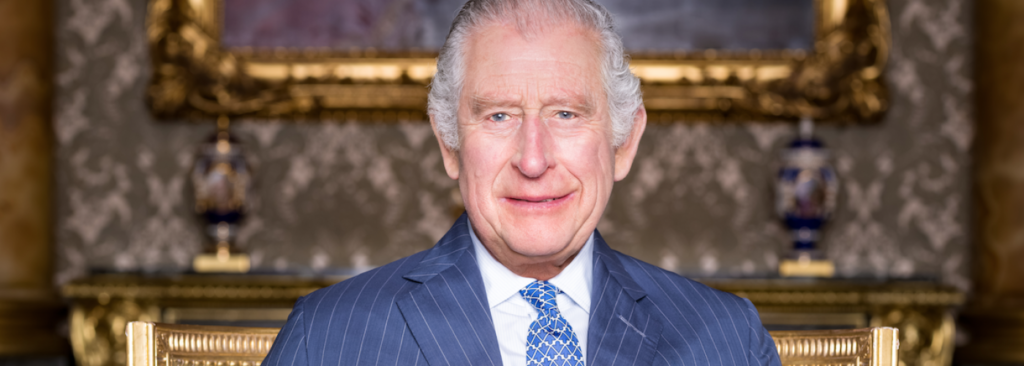
We were delighted to receive the news from Buckingham Palace that HM King Charles III has kindly agreed to continue as Patron of the English College Foundation in Prague.

ECP’s Headmaster, Dr Nigel Brown said: “We have always been proud that our Founder Patrons were the then His Royal Highness The Prince of Wales, and President Václav Havel. Prince Charles visited the College twice, in 2000 and 2010, and many of our former students still talk about the time they were able to meet him and to tell him about their studies at the English College.”

To mark the first anniversary of HM The King’s coronation last May, a new list of the King’s patronages has been announced. It has been confirmed on the Royal Family’s website that the English College Foundation in Prague would continue to enjoy the patronage of His Majesty King Charles III.

 We are very grateful that King Charles has decided to continue as Patron of the English College in Prague. We send him our best wishes, and we look forward to welcoming him back to Prague again in the future.


Remembrance Day

Share this article

Every year at the English College we remember those who died in the service of their country. Last week, Dr Brown took an assembly for Years 1 and 2 where he talked about the meaning of Remembrance Day. He told them about the red paper poppies that we sell to raise money for the Royal British Legion.

Royal British Legion Poppy Appeal

Remembrance Day

The Royal British Legion is a UK charity. It organises one of the most successful charity collections in the country. Every year, thousands of volunteers sell millions of poppies to help ex-servicemen and women and their families. The poppy is the symbol of this important charity because it was the first flower to grow back in the battlefields of northern France and Belgium after WWI.

Remembrance Sunday

Remembrance Sunday takes place on the second Sunday of November, the nearest Sunday to Armistice Day. The first Armistice Day was on 11 November 1918. At the eleventh hour of the eleventh day of the eleventh month, the guns fell silent to mark the end of WW1.

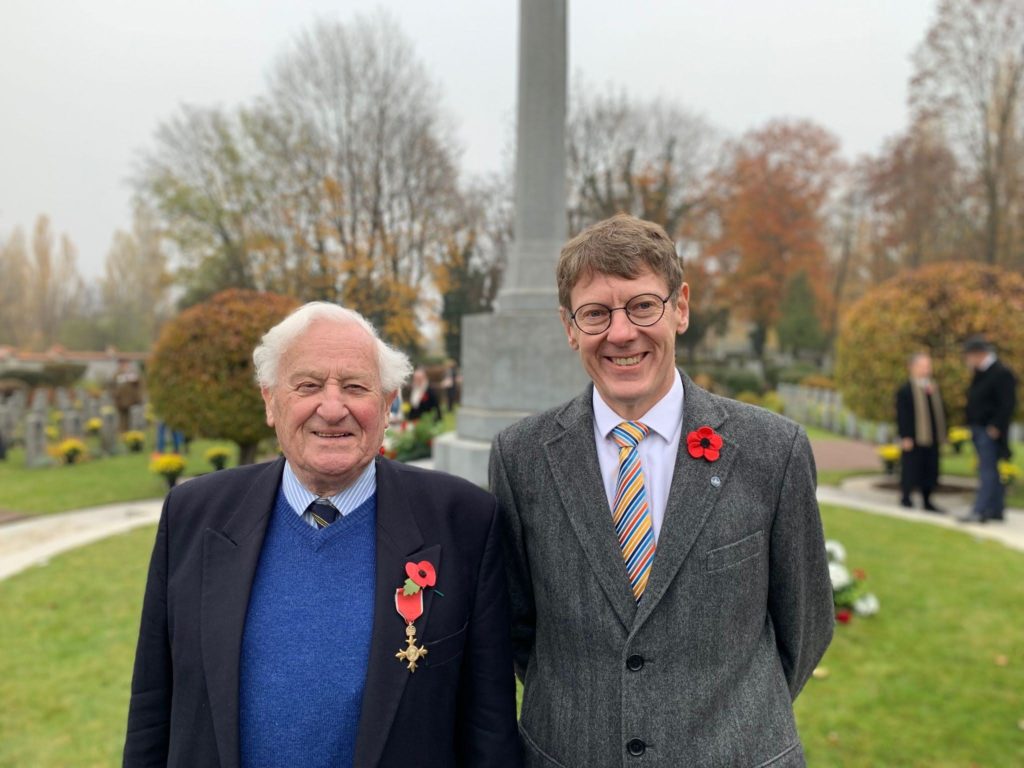
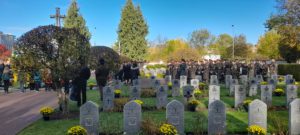
Students joined Dr Brown and Mr Emmerson to represent the College at this year’s Remembrance Sunday ceremony at the Commonwealth War Cemetery at Olšany.  A ceremony just like the one they attended here in Prague takes place in every city, town and village in the UK. Local people come together to remember those who fought for the freedoms we all enjoy today, but who never came back. One of the students, Emilly Hégr in Year 1, said, “What I found most touching at the ceremony was definitely the prayers at the beginning of the ceremony. They really touched my heart.”

Known unto God

After the ceremony, our students were able to walk along the rows of gravestones. 290 soldiers, sailors and aircrew are buried there. Most are from Commonwealth countries. There are also the graves of eight Polish soldiers. Particularly poignant are the graves with no name. Their headstones read simply ‘Known unto God’. The remains they contain could not be identified. They belong to young men whose families knew only that their sons or husbands or brothers were ‘missing in action’. They never knew where they had died and were buried, were never able to visit their grave.

Year 2 student, David Vesa, said, “The Remembrance ceremony was a touching tribute and engaging in conversations with distinguished military veterans and ambassadors added profound depth to the meaningful experience.”

British Embassy

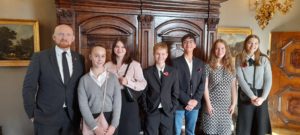
After the ceremony, staff and students went back to the British Embassy for the Ambassador’s chef’s famous ‘traditional curry lunch’. The British Embassy is housed in the magnificent Thun Palace in Malá Strana. Students were able to see inside this historic building and its beautiful garden, at the foot of Prague Castle, as well as enjoy a splendid lunch.

Filip Bulušek in Year 1 said, “I found Remembrance Day very interesting but the biggest memory I have is the visit to the British Embassy. We met the British Ambassador Matt Field and we also had our photo taken with him. Remembrance Day was a great occasion and I would like to attend it again next year. “

ECP welcomes British Ambassador

Share this article

Matt Field

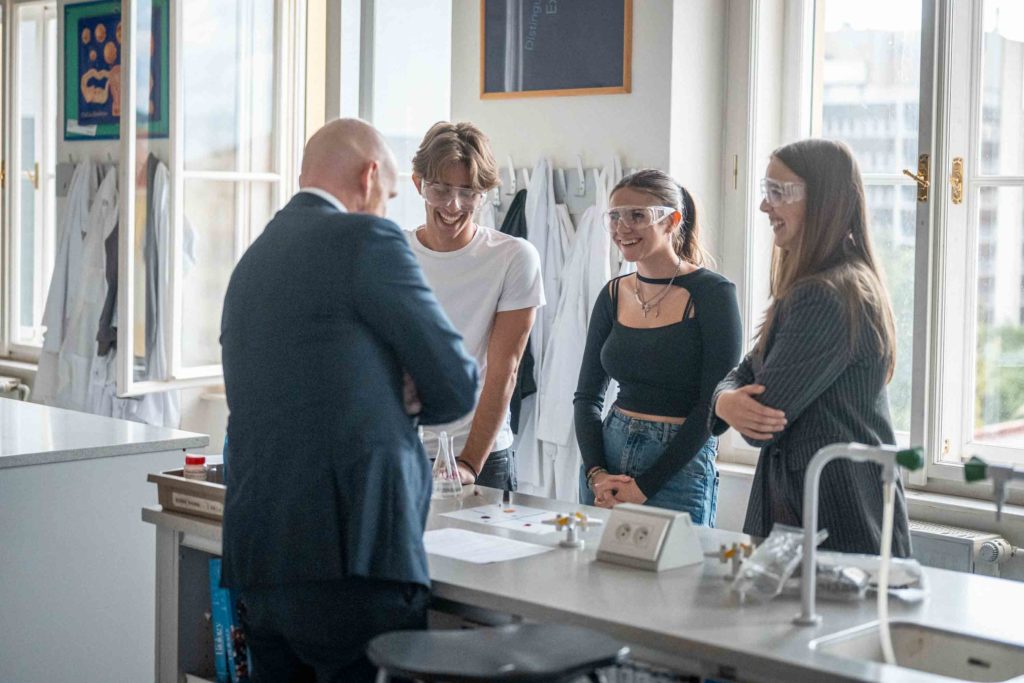
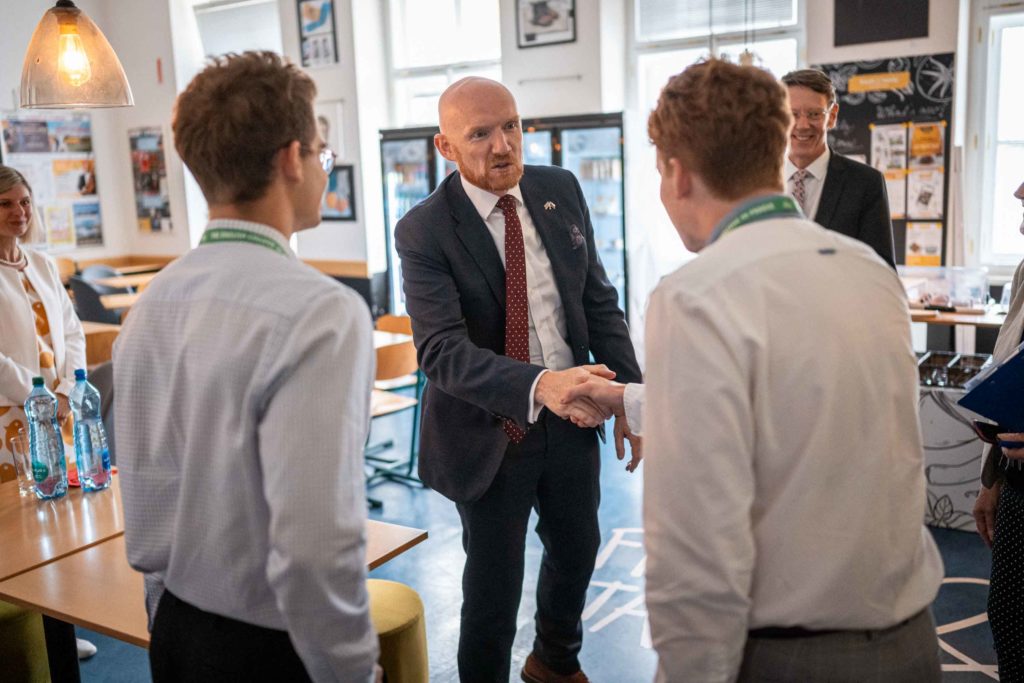
The English College has always had close ties with the British Embassy so it was a pleasure to welcome the UK Ambassador, Matt Field, into school last week. Here he is with three of our IB Chemistry students who are showing him an experiment.

Student Ambassadors

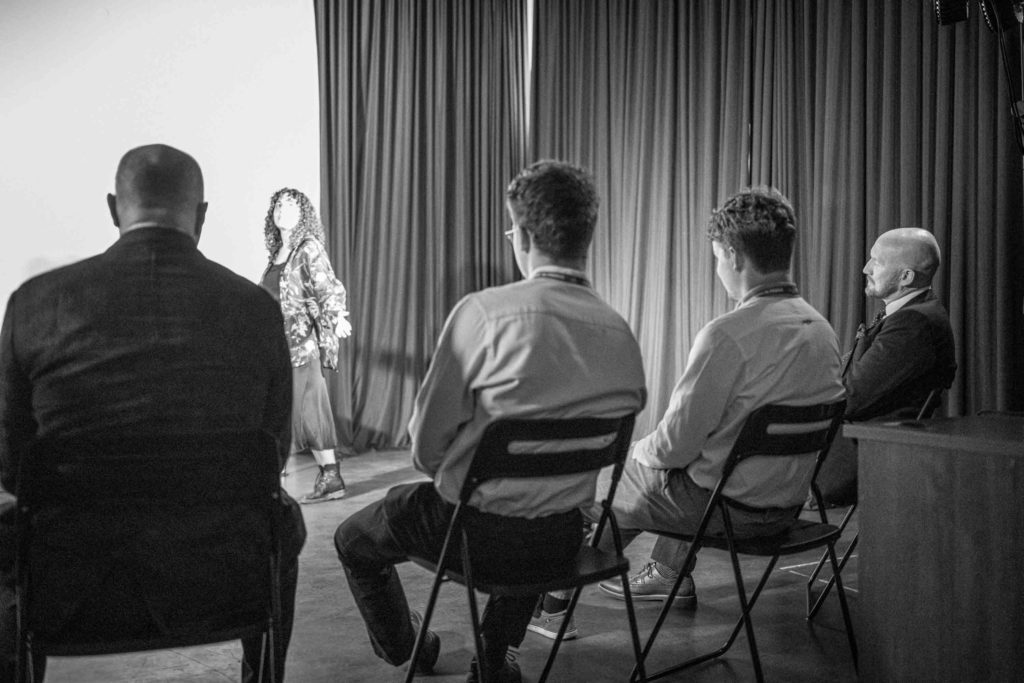
A school’s most important ambassadors are its students and so ECP students were centre stage of the visit, both metaphorically and literally. Karolína Mammadli and Loreta Votavová provided a dramatic interlude. Karolína performed a monologue from Shakespeare’s Titus Andronicus and Loreta described an extract from Terra House’s winning entry at this year’s Cultural Olympiad, a chilling horror film.

Dmitry Cheremisin and Kryštof Folbrecht, who graduated from the College this summer, returned to act as the Ambassador’s guides. Kryštof is going to study PPE at Salzburg University and Dmitry will be studying Economics at the University of Cambridge.

Model United Nations Conference

Students wanted the Ambassador to hear about their plans for a MUN Conference in November. The purpose behind MUN is to show students what the United Nations does. It also encourages them to research and debate the important global issues faced by countries around the world.

The theme of ECP’s MUN conference is global peace. Our students believe that peace not only between countries and societies, but also between individual peoples is vital. It is necessary to create supportive and passionate societies that will come together to solve world problems.

Careers Advice

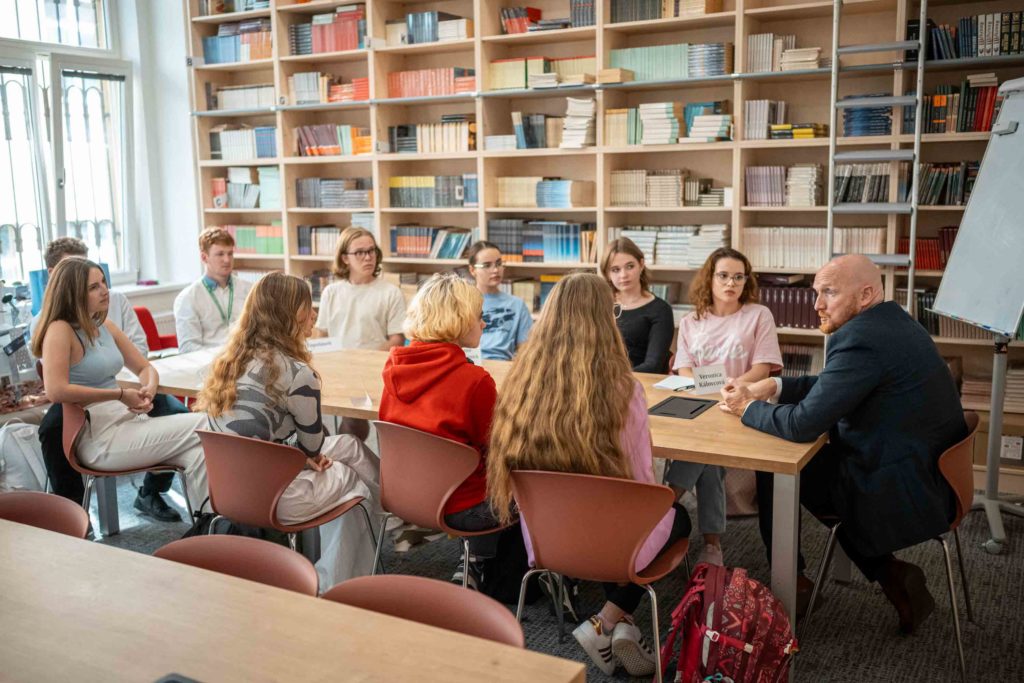
The English College places great importance on providing students with access to information about careers. So we were very grateful to Matt Field for agreeing to talk to a group of our aspiring diplomats. He told them about his own recruitment into the Foreign & Commonwealth Office. This included a language aptitude test that involved having to quickly learn twenty words in a language previously unknown to him and having to recall them later. He also had to take part in an exercise to test candidates’ soft skills in negotiations.

Brexit

Amongst the subjects raised with him by students was how diplomats deal with the situation when their own views do not coincide with their Government’s policies. He talked about the tricky problem faced by British diplomats around the world as a result of the 2016 Brexit referendum. This eventually led to the UK leaving the European Union four years later. It is no secret that many British diplomats personally regretted the decision. But, as Matt Field explained, democracy had spoken and given that it was the will of the British people, it was the duty of the country’s diplomats to explain it around the world.

That doesn’t mean that diplomats can’t have personal views, he explained. They are even allowed to be members of a political party. But if they want to campaign on political issues, then they must leave the service and become politicians. One of the most important non-governmental jobs in the UK Parliament – chairing the Foreign Affairs Select Committee – is held by Member of Parliament Alicia Kearns who had previously served in the Foreign Office, but who resigned in order to follow a political career.

The Ambassador also told students that their country’s own diplomatic service is not the only route to a career in international relations. There are many institutions that employ foreign affairs specialists. These include international non-governmental organisations and Matt Field worked for Oxfam before becoming a diplomat. There are also multinational corporations and international institutions such as the United Nations, the World Bank and the World Health Organisation.

ECP Graduate Diplomats

The English College is developing a reputation for educating future diplomats. As well as Jan Brunner (1999), who is currently Deputy Head of Mission at the Czech Embassy in Vienna, we now have our first Ambassador, Lucie Samcová-Hall Allen (2000) is Head of the European Union Delegation to Iceland. Other ECP diplomats include Tomáš Pospíšil (1999), DHM of the EU Delegation to Uruguay and Tomáš Minárik (2000), Acting Director, Department of International Cooperation and the EU at NÚKIB (National Cyber and Information Security Agency). And although technically not a diplomat, Daniel Braun (1998), is Head of Cabinet of the Vice President for Values and Transparency at the European Commission.

It will be interesting to look back in ten years to see which members of this group of potential diplomats amongst our current students were able to follow their dream and become diplomats.

Early Days of the College

ECP’s connections with the British Embassy go back a long way. Back in February 1990, the then British Ambassador, Laurence O’Keeffe, was present at a meeting at Prague Castle between the new President Václav Havel and UK Foreign Office Minister, William Waldegrave. This is when the idea of recreating the former Prague British Grammar School – on which the ECP was based – was first discussed. ECP Founder Governor, Ann Lewis, who was also present at the meeting with the President, remembers it well. She recalls that the President was enthusiastic about the idea although, as she says in the book Leaves and Branches, setting out the history of the first 20 years of the English College “none of those present on the UK side had ever heard of the old English Grammar School, but we were keen to pursue the idea.”

Since then, several Deputy Ambassadors have served as Governors of the English College. These include the current Chairman, Denis Keefe, who was Deputy Head of Mission from 1998 to 2002. He is a former colleague of Matt Field in what is now called the Foreign, Commonwealth & Development Office. He served as UK Ambassador to Serbia at the same time that Matt Field was UK Ambassador to Bosnia Herzegovina.

Insights into Psychology

Share this article

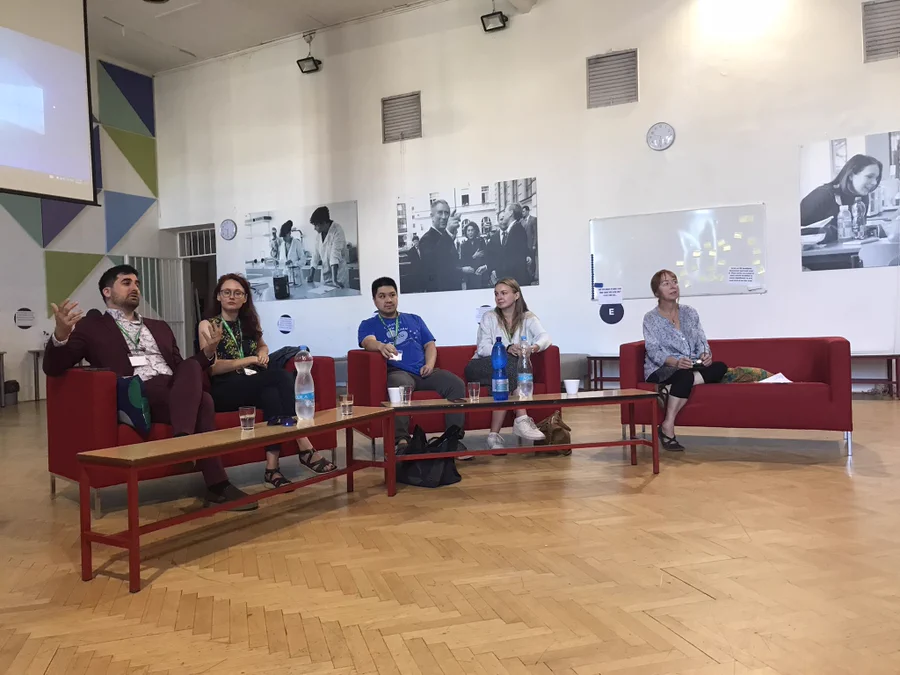
ECP Psychology graduates offering advice to the current cohort of IB Psychology students.

Students at the ECP are fortunate that our alumni are willing to come back into school to offer careers advice. Last week, our IB students were able to hear from four of our graduate Psychologists – Dr Ingmar Gorman, Anna Hejlová, Charlie Quoc Anh Dang and Dr Eva Nouzová. We are very grateful to them for giving up their time to help the next generation of ECP Psychology students. As well as providing factual advice, these sessions help students to picture where they could be in their own careers in 10 or 20 years’ time.

Range of Experience and Expertise

Ingmar and Eva are both Clinical Psychologists. Ingmar graduated in 2003 and moved to America. Originally planning to study Philosophy, he changed course and studied Psychology. He now works in the sometimes controversial field of the use of psychedelics to treat PTSD. He is Co-Founder of Fluence, a psychedelic education company. They provide mental health training in psychedelic treatments. Ingmar told students about the progress this research has made. He predicted that they could be available on prescription in 2025.

Eva, a 2007 graduate, is also a Clinical Psychologist. Her path took her to Scotland where she studied at Aberdeen University She achieved an MA Joint Honours in Psychology and Sociology, before a PhD in Psychology. Still with the hint of a Scottish accent, she fascinated students with a description of her research into how eye movements can be used to identify conditions such as schizophrenia. Eva has now returned to Prague where she has her own practice.

Working in a Prison

There was a change of mood when Charlie, one of the Class of 2013, gave a chilling insight into a darker area of psychology. With a Master’s degree in Criminal Forensic Psychology and Victimology from the University of Groningen, he works as a Correctional Psychologist with medium to high risk prisoners at a maximum security prison. He described what it is like to work in an environment where he has to constantly assess the risks he and others face from his clients. It is a highly pressured field where it is normal to move on after only a few years. Charlie therefore expects to transfer to consultancy work with the police in the future.

Change Management

Anna’s experience provided a contrast with the often intense work carried out by her fellow graduates. After graduating from the ECP in 2015, she gained her BSc in Psychology at Queen Mary University of London. She then moved to the LSE for her MSc in Organisational & Social Psychology. This included a year’s internship with a learning and development consultancy. Anna now works with commercial clients, advising on change management, for a management consultancy. She says: “One of the advantages of this branch of psychology is that I can leave my work behind at the end of the day. This is not always easy for psychologists working with patients to do.”

ECP Alumni

ECP has an extensive alumni organisation, launched at the British Embassy in 2015, as part of our 20th anniversary events. The English College in Prague Network (ECPN) helps our graduates to keep in touch with the College. And importantly, it provides current students with access to a wealth of experience and advice. The ECPN also puts graduates working in the same field in touch with each other – a true support network.

Building Plans

As well as encouraging the idea of ‘putting something back’, which was one of our Founders’ original aims for the College, these careers sessions provide graduates with the opportunity to visit their old school. They welcome the chance to catch up with some of their former teachers. Ingmar, Eva, Charlie and Anna were also able to hear about our exciting building plans, which will enable us to bring the whole school back under one roof and provide exciting new facilities.

Welcome back and Good Luck!

Share this article

As we start the new academic year, the English College in Prague is looking forward to welcoming our students back to school. Especially welcome are the new students joining us for the first time to begin their journey to the IB Diploma.

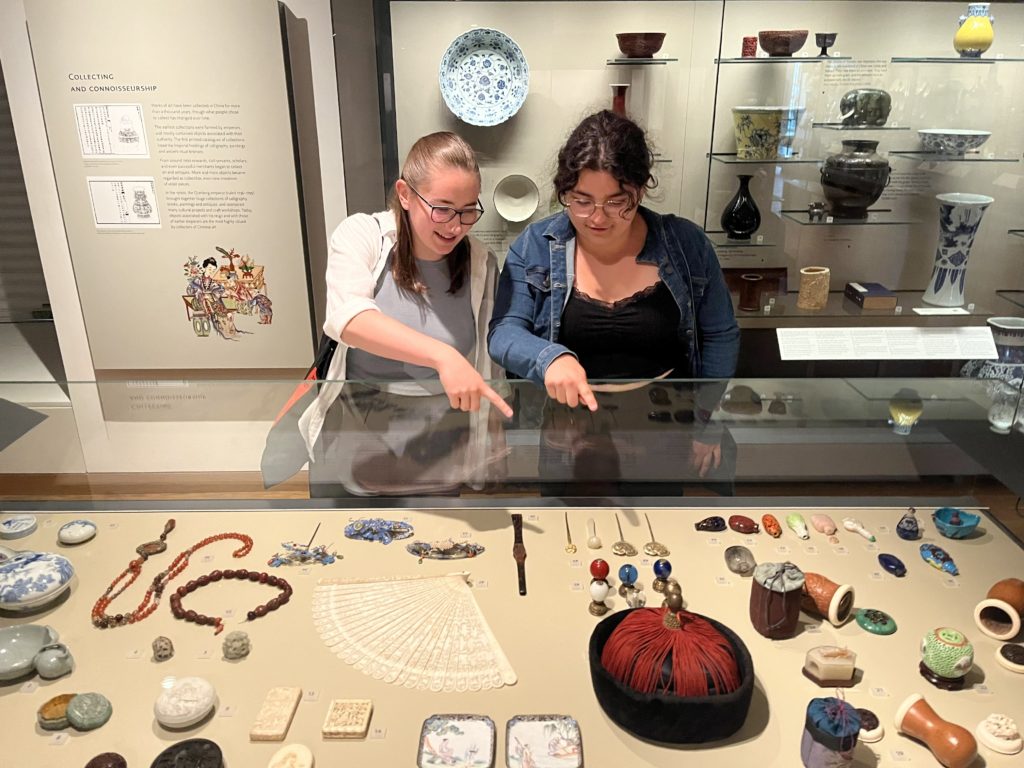
Studying the exhibits at the Ashmolean Museum.

Studying the exhibits at the Ashmolean Museum during the Oxford trip

But September is also a time to think about this year’s graduates as they prepare to begin their university studies.

IB Results

This summer’s IB results were our best ever. All ECP students are able to sit the IB exams, not just those most likely to do well. This is what happens in some schools where only the top students can take the IB with the majority sitting only the Maturita. So for us to achieve an overall average of 37* out of a total of 45 across all 71 students in the year really is outstanding. *Compared to the world average of 30.24

Huge congratulations to all our graduates and their teachers on this amazing achievement. We are also delighted that three students scored the maximum 45 points. Only 179 students throughout the whole world, out of the nearly 180,000 who took the IB Diploma this year, achieved this exceptional feat.

Off to University!

So ECP graduates are now heading off to some of the most prestigious universities around the world. One of them is Dmitry Cheremisin who will be studying Economics at the University of Cambridge. Every year, the English College always sends at least one student to Oxford or Cambridge. This is partly as a result of the additional work we do throughout their school careers to help those who want to study there.

The Oxford Experience

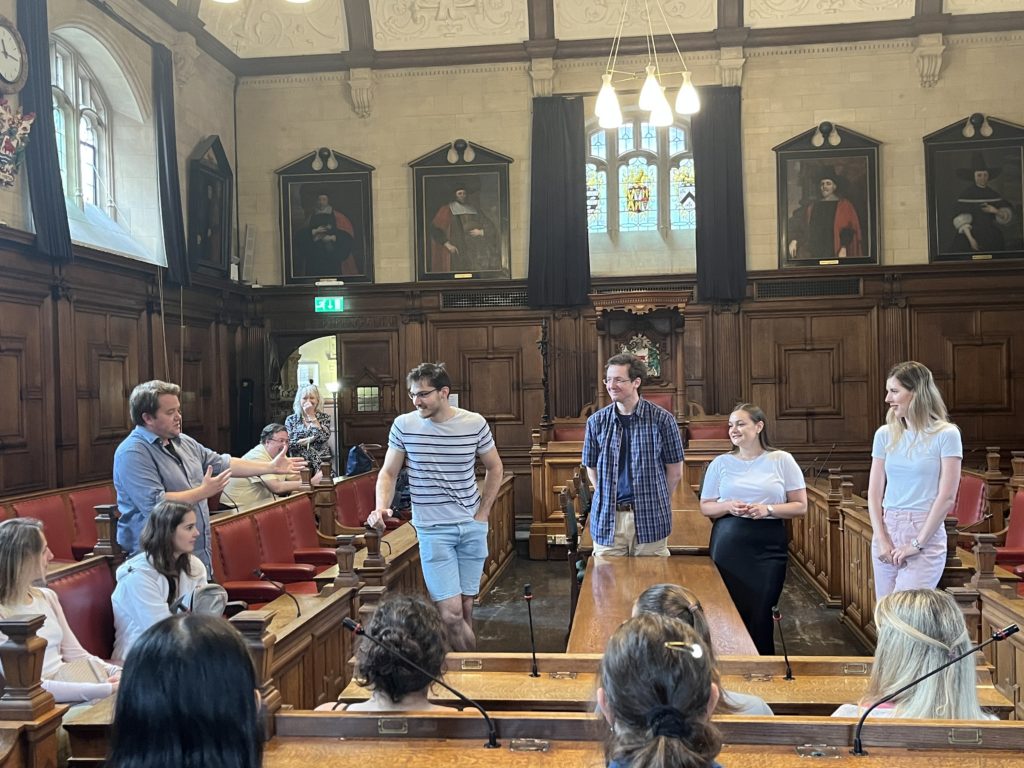
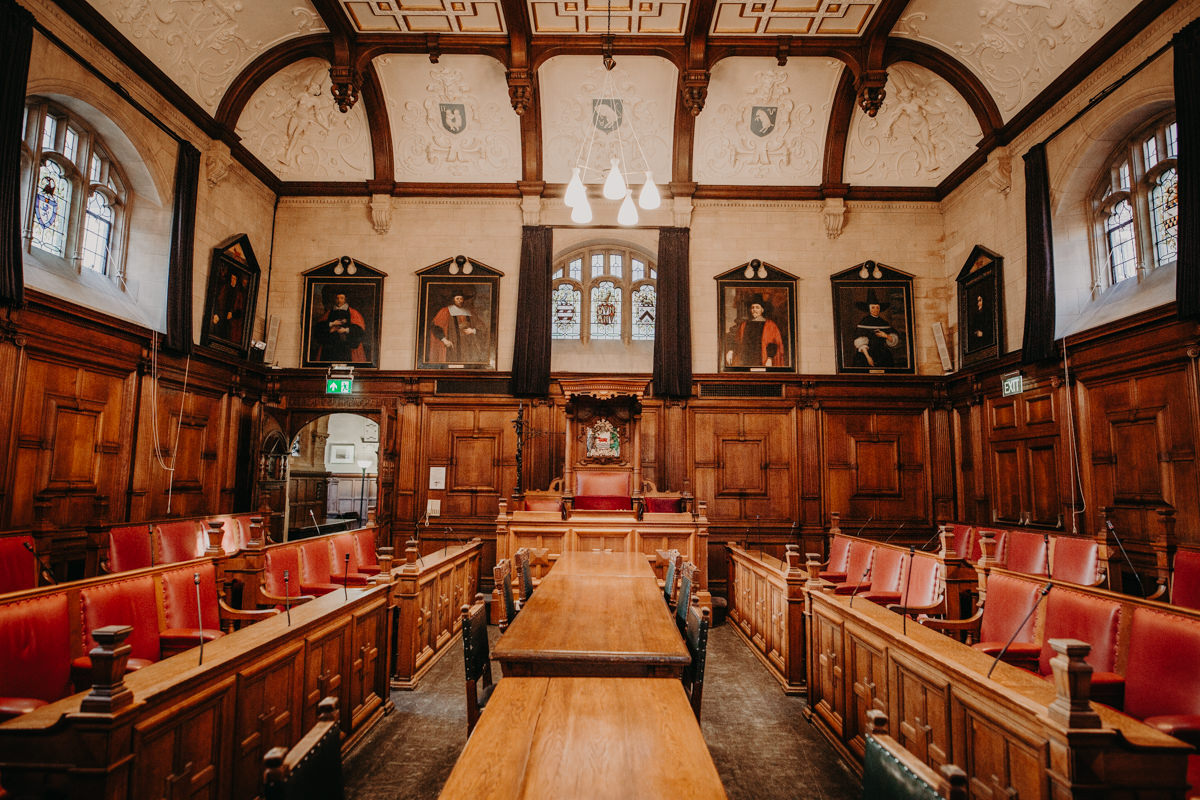
This starts with Year 4 students when we organise a trip to Oxford, led by Deputy Head Laurence Baxter. Laurence comes from Oxford and has himself studied at the University. We were very grateful to four of our graduates for joining us in the grand surroundings of the Oxford Town Hall’s Council Chamber They led a session about studying and working in Oxford and the UK. We were also delighted to be joined by Councillor Ed Turner, Deputy Leader of Oxford City Council.

ECP graduates give up their time to help current students.

Kryštof Sršeň (2021), Filip Němeček (2014), Nella Bestová (2017) & Michaela Sommerová (2015)

One of the ECP graduates who joined us was Filip Němeček. Filip first studied Geography at St Andrew’s University in Scotland. He then moved to Oxford University to take his Master’s, where he is now studying for a PhD.

The City of Harry Potter, Alice in Wonderland and The Hobbit

As well as introducing students to the possibility of studying at Oxford, the trip enabled them to experience the history and tradition of Christ Church College, the Bodleian Library, the Ashmolean Museum and the Sheldonian Library. The Bodleian Library is famous for housing a vast collection of books and manuscripts. Our students impressed our guide by answering one of his questions faster than anyone had ever answered it before!

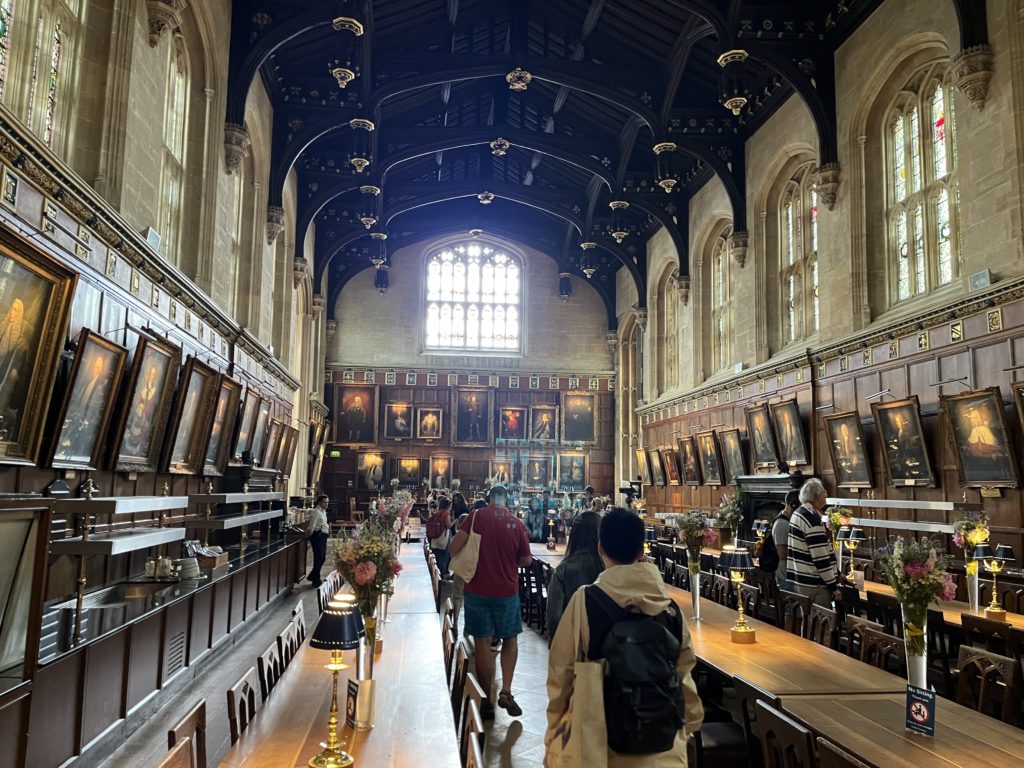
Christ Church College was immediately familiar to all Harry Potter fans. It is one of Oxford’s most historic colleges and was the setting for Hogwart’s Great Hall.

Christ Church College, which was used as the location for Hogwart's Great Hall

Christ Church College, which was used as the location for Hogwart’s Great Hall

Oxford is well known for the famous figures who have passed through its colleges, including the mathematician Charles Dodgson. The Reverend Dodgson is better known by his pen name Lewis Carroll. Inspired by the College’s magical surroundings, he wrote ‘Alice’s Adventures in Wonderland’ during his time at Christ Church. J R R Tolkein was also a professor there.

Our students were able to see how the Oxford University college system, with its separate colleges functioning as individual communities within the larger university, encourages academic excellence and a strong sense of identity.

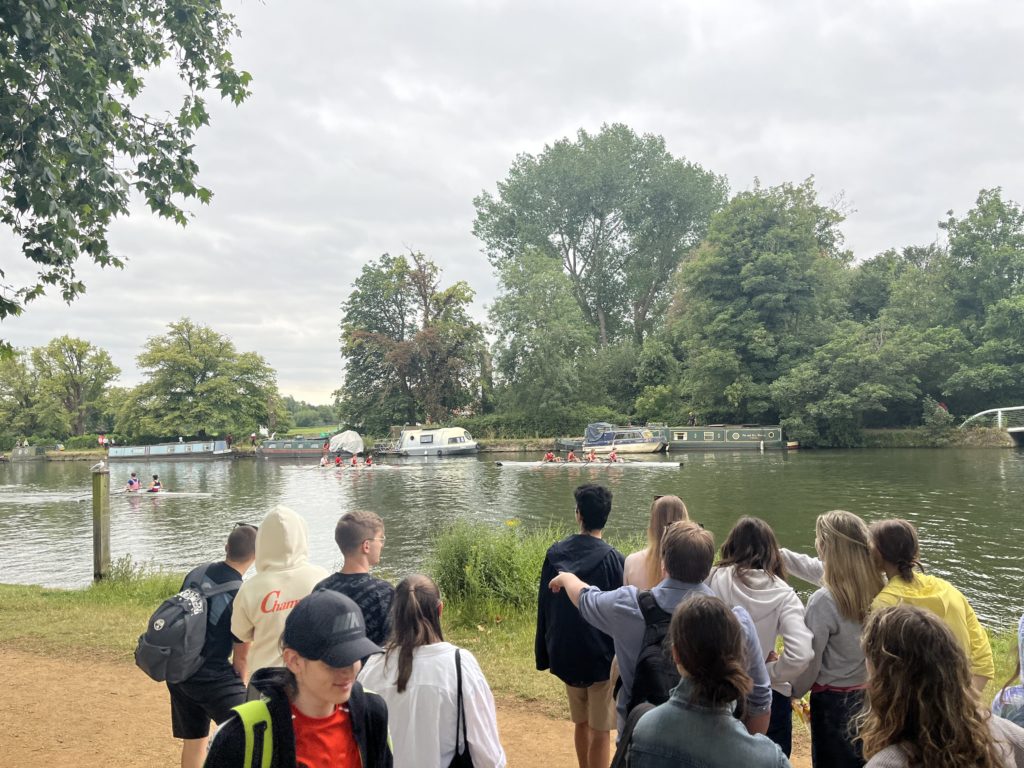
But as well as history and tradition, students were also able to enjoy the more modern delights of Oxford’s vibrant shops and restaurants and to watch undergraduates rowing on the Thames.

Rowing on the Thames

Watching rowers on the Thames

UNESCO World Heritage Site

Students also visited Blenheim Palace – a UNESCO World Heritage Site – with the journey to the nearby town of Woodstock on a double-decker bus an event in itself. It is one of England’s most significant Baroque grand houses. The ancestral home of the Churchill family for over 300 years, it was the birthplace of Sir Winston Churchill, one of Britain’s most iconic leaders.

ECP Oxbridge Graduates

The trip was, for most of our students, their first introduction to Oxford and the possibility of studying there. Our next Oxbridge event will be later this month when some more of our graduates who studied at Oxford or Cambridge are coming back into school to answer current students’ questions and to inspire them to follow in their footsteps.

The Coronation of King Charles III

Share this article

Coronation quiche

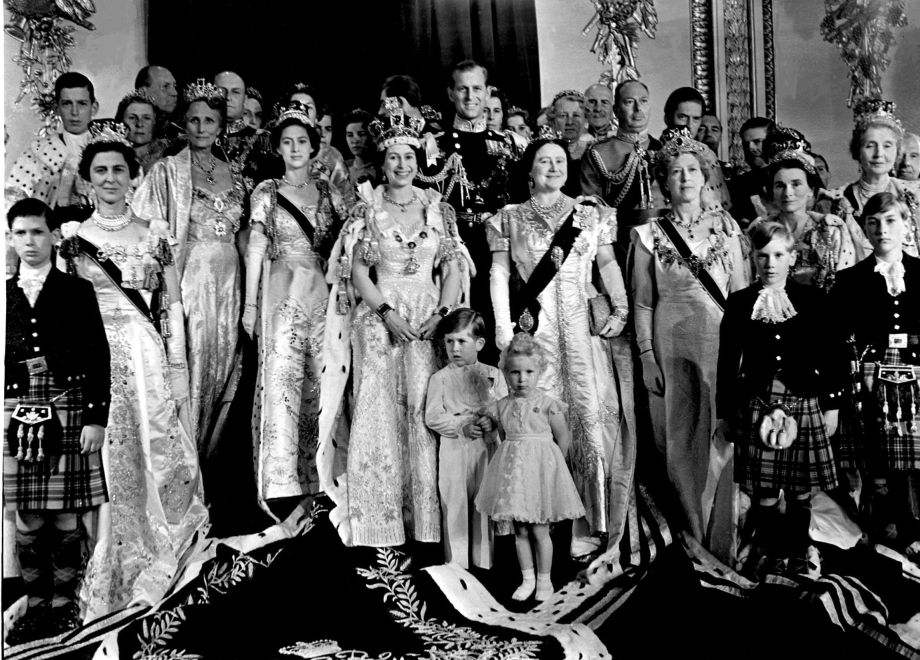
Saturday 6 May will see an event in London that few people alive today will have ever witnessed – the coronation of a monarch. The last coronation took place on 2 June 1953 and we have to go back even further to find the last coronation of a king, to 12 May 1937, when King George VI was crowned. He was the late Queen Elizabeth’s father and King Charles III was his grandson.

HM Queen Elizabeth II's coronation in 1953

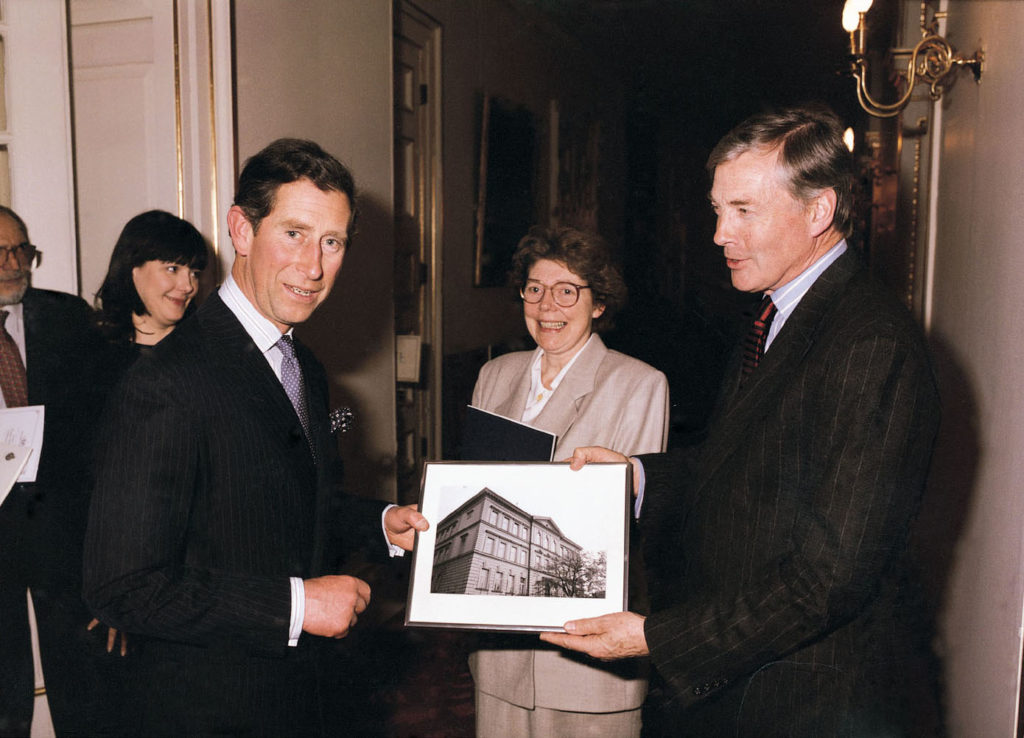
When the then Charles, Prince of Wales became our Patron back in 1991, along with President Václav Havel, he was well aware of the historic links between our two countries and supported the work that had begun to encourage the newly democratic Czechoslovakia to modernise and thrive. 

Prince Charles being presented with a photograph of the English College.

One of the ways of doing this was to encourage the teaching of English and to introduce liberal teaching methods to replace the old politically-based communist system with its emphasis on rote learning. Teachers began to encourage their students to express and defend their own opinions and there was a move to open up tertiary education to everyone instead of only to those who supported the regime. The English College, as the first IB school in the country, blazed a trail in encouraging those cultural changes and continues to do so today.

Royal Patron visits the English College

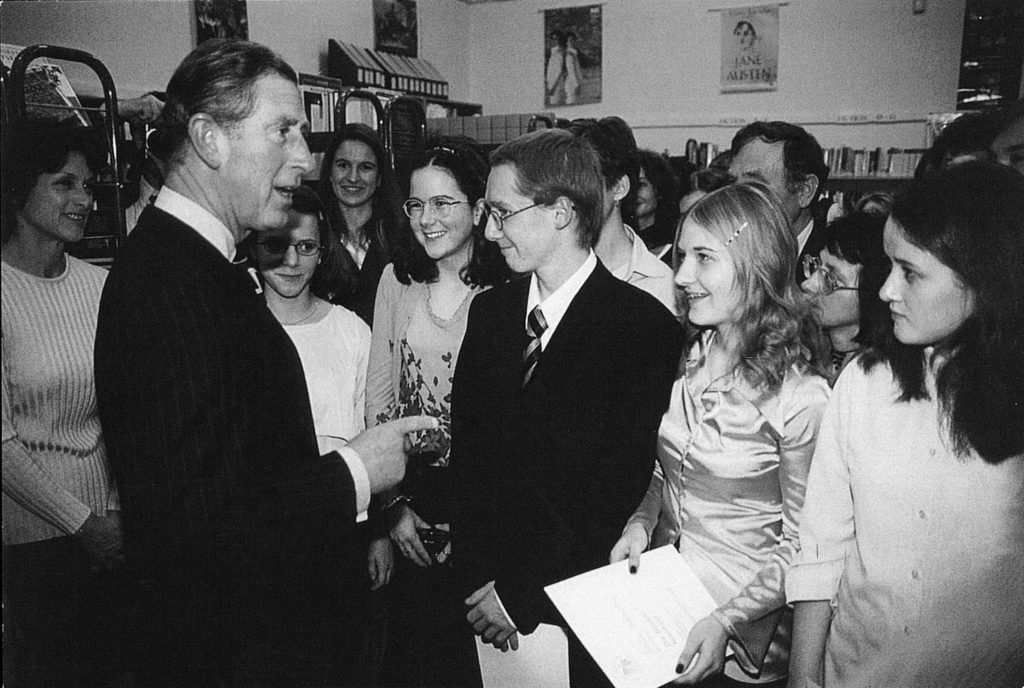
Over the years, our Royal Patron has shown a continuing interest in the College, despite being patron of over 400 organisations. He has visited the English College on two occasions. The first was in October 2000 (pictured below) and the second on 23 March 2010. You can see a video of the 2010 visit on our YouTube channel

Prince Charles's visit to the ECP in 2000.

In 2019, he gave us permission to create a new Prince of Wales Scholarship. ECP’s Scholarships & Bursaries Following the death of Václav Havel in 2012, he officially asked Karel Schwarzenberg to become the College’s Czech Patron and we were delighted to hear Mr Schwarzenberg recently recall this connection between our two Patrons in an interview he gave to Prima News

Coronation Quiche

So to celebrate ECP’s relationship with the new King, we wanted to find a way to mark the historic coronation and what better way than through our two countries’ shared love of food? 

King Charles’s mother, the late Queen Elizabeth, had a special dish invented for her own coronation. Coronation Chicken has become a staple at many British buffets and its creamy, mild curry flavoured mayonnaise, mixed with shredded chicken, was seen as a nod to the British Commonwealth. However, it is interesting to reflect that at the time, in 1953, it would have been an expensive ‘special occasion’ dish as it was only much later that chicken became as ubiquitous as it is today.

Now, King Charles has chosen one of his favourite dishes with which to celebrate his coronation. Most people like a good quiche, usually containing bacon. But King Charles’s special Coronation Quiche is a more modern affair. Vegetarian, to enable more people with different dietary requirements to enjoy it, and chock full of healthy green vegetables, Coronation Quiches are being busily prepared in kitchens up and down the UK, ready for the long Coronation Weekend.

ECP’s Great Coronation Quiche Bake Off

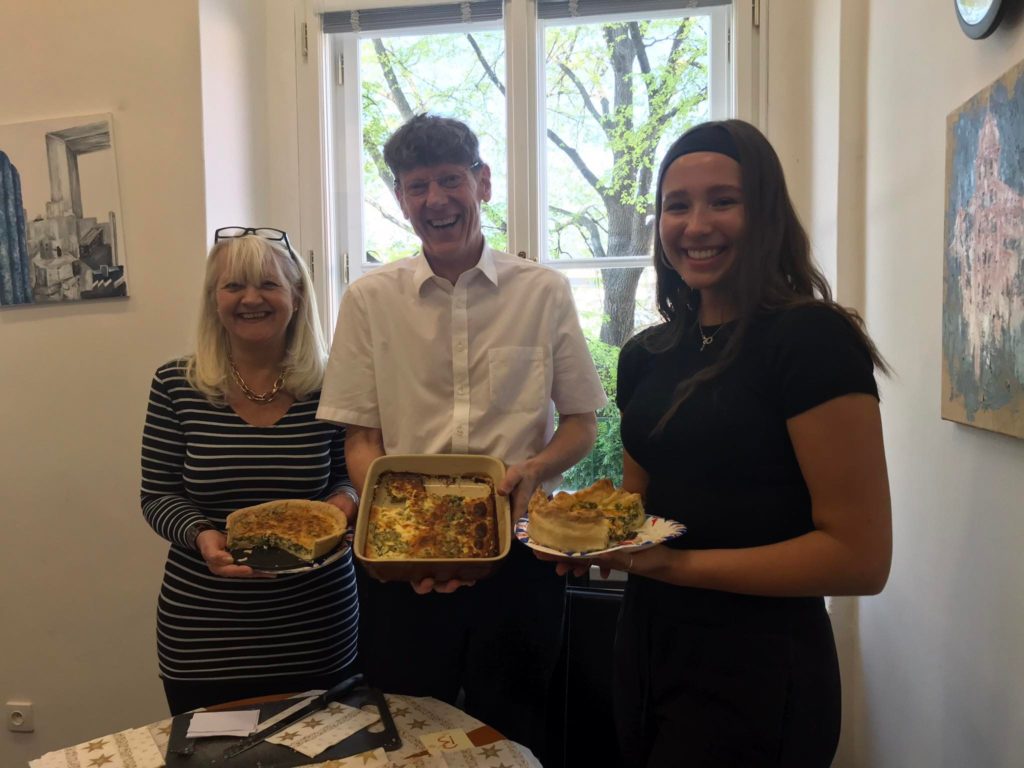
So it seemed fitting that three keen ECP cooks should take part in our very own Great Coronation Quiche Bake Off, each submitting their own version to be judged by members of the Senior Leadership Team. It was a close contest, with the panel judging each entry on appearance, texture and flavour, while on the lookout for the dreaded soggy bottom! But in the end, the worthy winner of the ECP’s Great Coronation Quiche Bake Off was Julie Viačková in Year 4.

The Great Coronation Quiche Bake Off contenders

The ECP always seeks to encourage its students to follow their passion and this year, Julie won a coveted Talent Award for cookery. She intends to use her award to enroll on a specialist bakery course to improve her baking skills.

And if you want to try to make your own Coronation Quiche, you can find the recipe on the Royal Family’s website.

Eurovision 2023 comes to the English College!

Share this article

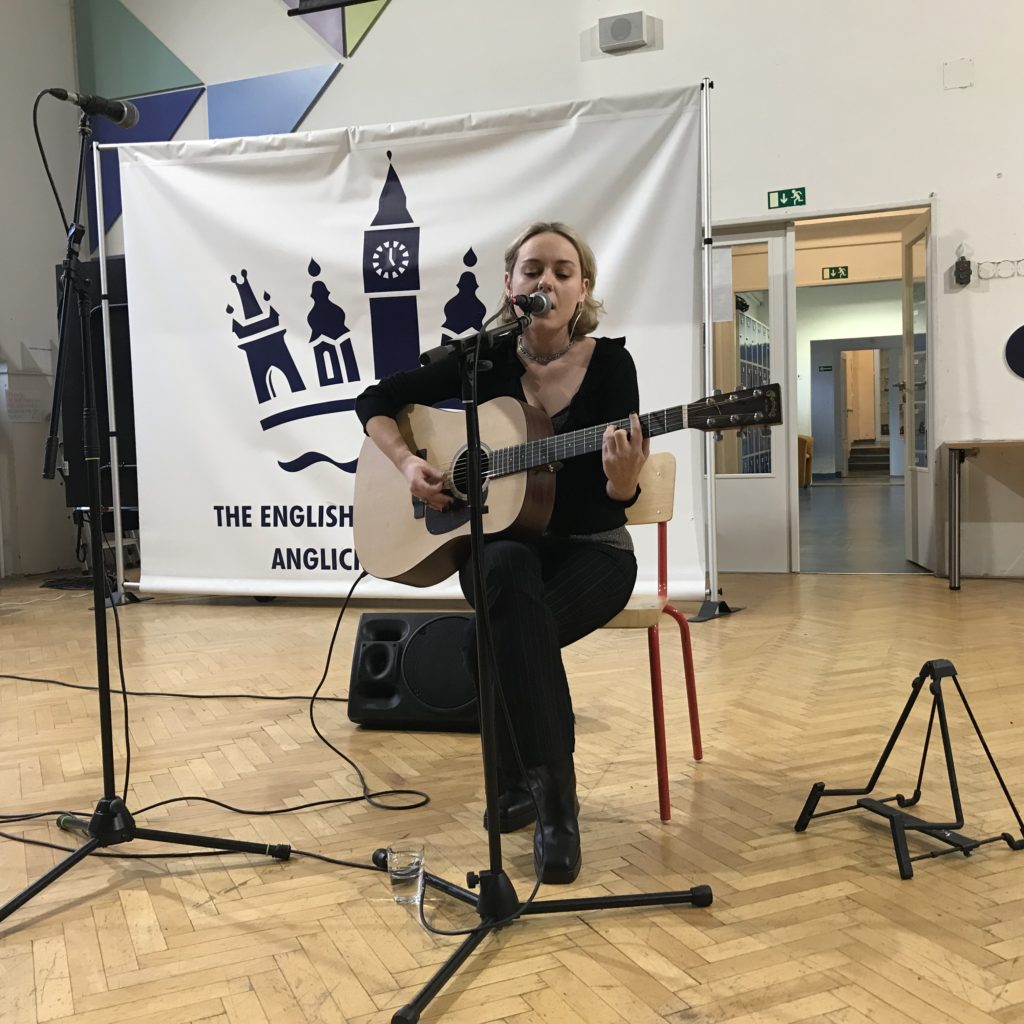
This week has been Eurovision Week at the English College! We are delighted that two of the five finalists in the race to represent the Czech Republic in Eurovision 2023 are alumnae of the ECP. Students and teachers alike were thrilled to welcome them both back into school to sing for us.

Patricie Fuxová

Patricie Fuxová graduated in 2010 and went on to study music at the Berklee College of Music. It was as a music student that she formed her band, Vesna, with whom she is competing for the honour of representing her country at Eurovision 2023.

Patricie said, “I think the reason the English College has produced so many Eurovision contenders is because students are encouraged to be creative and to follow their passion. Academic studies are very important, but it is also important for students to pursue their passion and to be given every opportunity to shine. I have seen in the music industry something else ECP students learn – that there is nothing wrong with making mistakes. It’s what helps us to learn and to develop as individuals and performers.”

Vesna’s song for Eurovision 2023 is called My Sister’s Crown. It was inspired by wanting to encourage women to have the confidence to shine. The band sings in Czech, English and Ukrainian and their rapper is Bulgarian. Many will find the Ukrainian lyrics of the chorus particularly powerful. The official video of My Sister’s Crown also features 2005 graduate Lilia Khousnoutdinova.

Michaela Charvátová

Michaela Charvátová is another ECP graduate performing in this year’s Eurovision 2023 as Maella. She graduated from ECP in 2015. Michaela studied songwriting at the BIMM Institute in London.

Her song, Flood, was written very quickly, she told students. She had been going through a rough time and felt sad at having to lean so much on her partner. But she said that the official video has a Latin beat to dance the sadness away. And to highlight the importance of the friends she made at the English College, the video was produced by 2014 graduate, Ruy Okamura. Ruy is in demand as a music video producer. He also produced Eurovision 2022 finalists DOMI’s official video Lights Off for another 2014 graduate, Dominika Hašková.

Cast Your Vote for Eurovision 2023!

After the live final at the beginning of the week, voting began to decide who would represent the Czech Republic at Eurovision 2023 in May. The polls close at one minute to midnight on Monday 6 February, with the result announced the next day.

So until then, ECP is supporting both of our talented graduates. We are keeping our fingers crossed and thumbs held that we can make it two in a row at the Eurovision finals. And when you’ve made your mind up who it should be, you can VOTE HERE

ECP Governor receives prestigious award 

Share this article

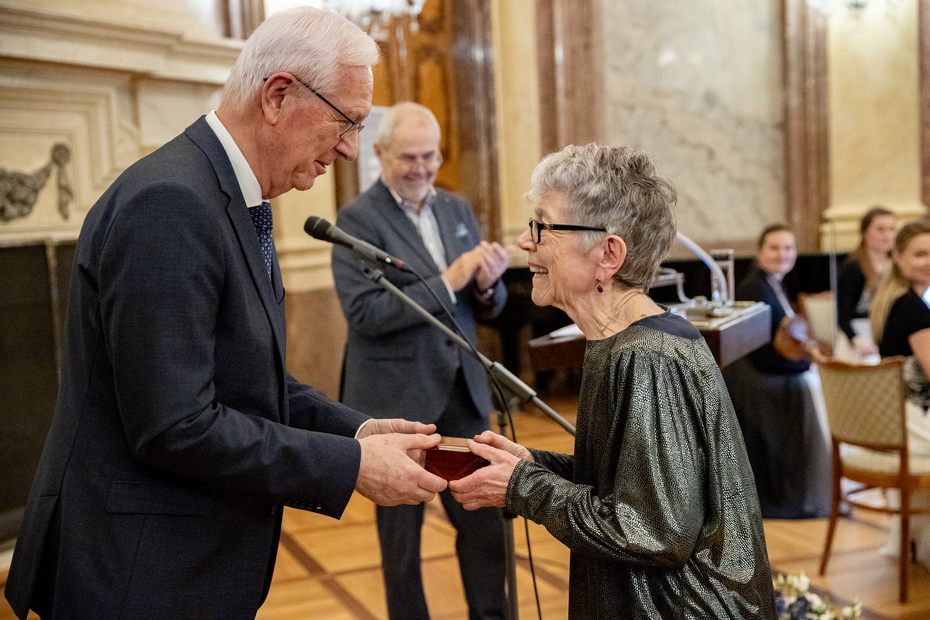
The English College offers its warm congratulations to one of its Founder Governors, Dr Barbara Day MBE. It was announced in the Czech Senát recently that Dr Day is one of eight people honoured by the Institute for the Study of Totalitarian Regimes – Ústav pro studium totalitních režimů.

ÚSTR has honoured Dr Day for ‘her extraordinary contribution to the reflection of modern history’. Also similarly recognised was the dissident Tomáš Vrba. He is the editor-in-chief of the cultural reviews Lettre internationale and Přítomnost. Sabina and Jan Kratochvil received the award as well. In 2007, they founded the Museum of Czech, Slovak and Ruthenian Exiles of the 20th Century in Brno.

The Institute is a Czech government agency and research institute. Founded in 2007, its purpose is to gather, analyse and make accessible documents from the Nazi and Communist totalitarian regimes. It is a founder member of the Platform of European Memory and Conscience.

Dr Day said, “I’ve always admired the Institute for the Study of Totalitarian Regimes and the work they do, and am honoured to receive this award. I feel that the award is not only for me but for all those involved in the underground seminars passing on their knowledge to the next generation.”

A Founder Governor of the English College since 1994, Dr Day serves on the Education Committee. She is also Chairman of the School Council. She received the Commemorative Medal of President Václav Havel in 1998 and an MBE in 2002. You can read her full profile on the ECP website.