When schools around the Czech Republic closed on March 10th, it was a new and somewhat exciting experience. But within a couple of weeks, students realised that online learning would not replace the school’s community spirit. Consequently, the Student Council planned a series of competitions in an effort to bring students closer together even as they practised physical distancing.
Students took the lead in organizing a virtual dancing club, video game tournaments, online chess, a fitness contest, and an online art competition. Some tournaments were individually based while students in other competitions fought for their respective houses.
Art Competition
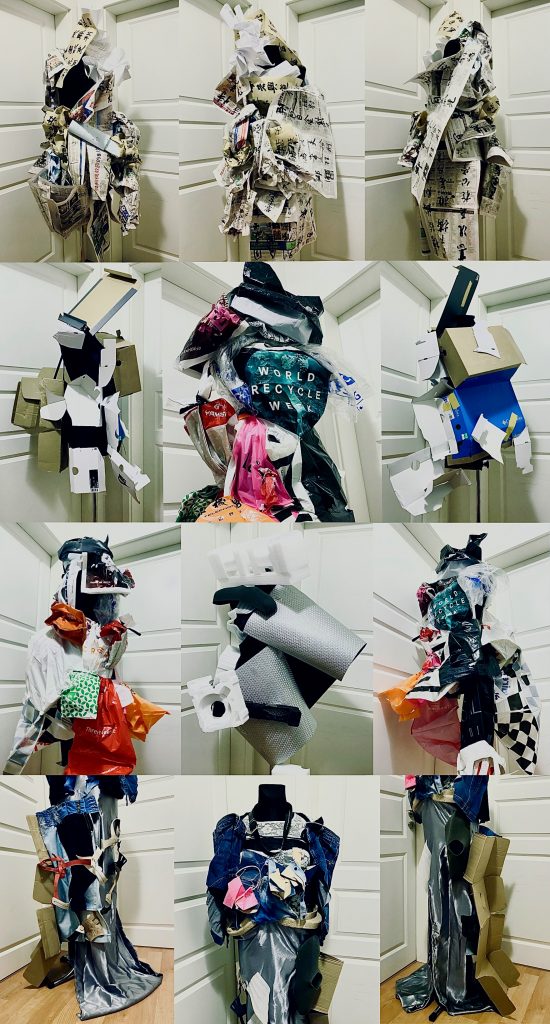
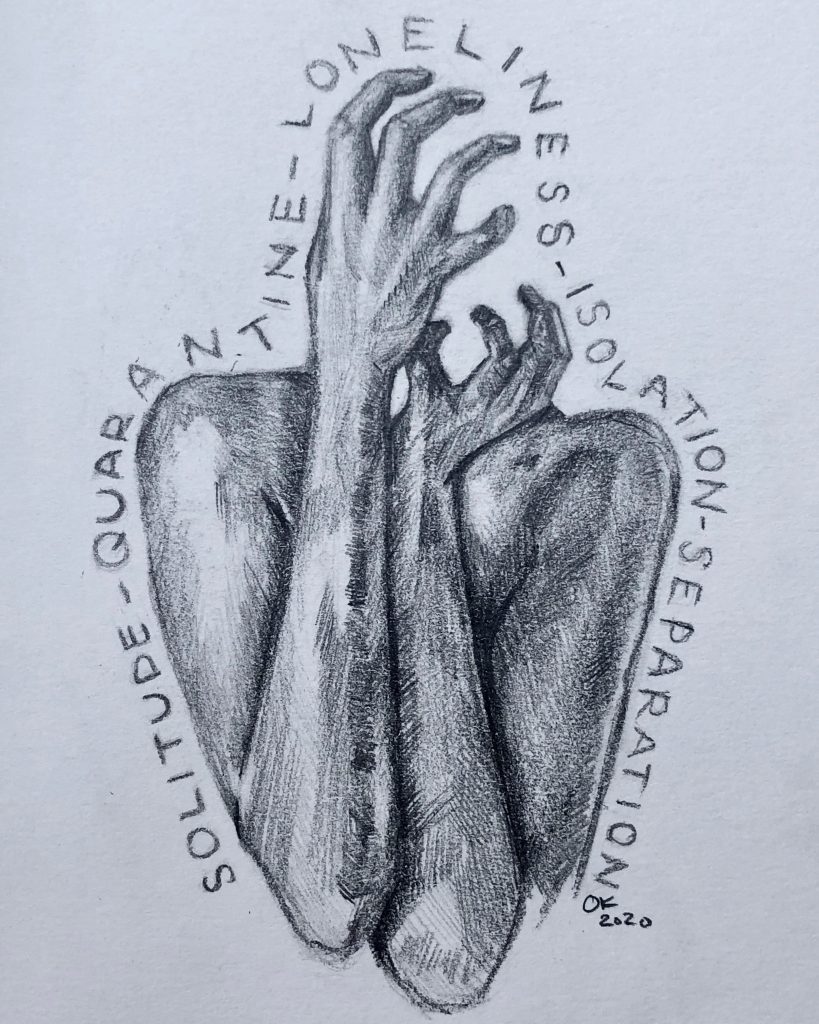
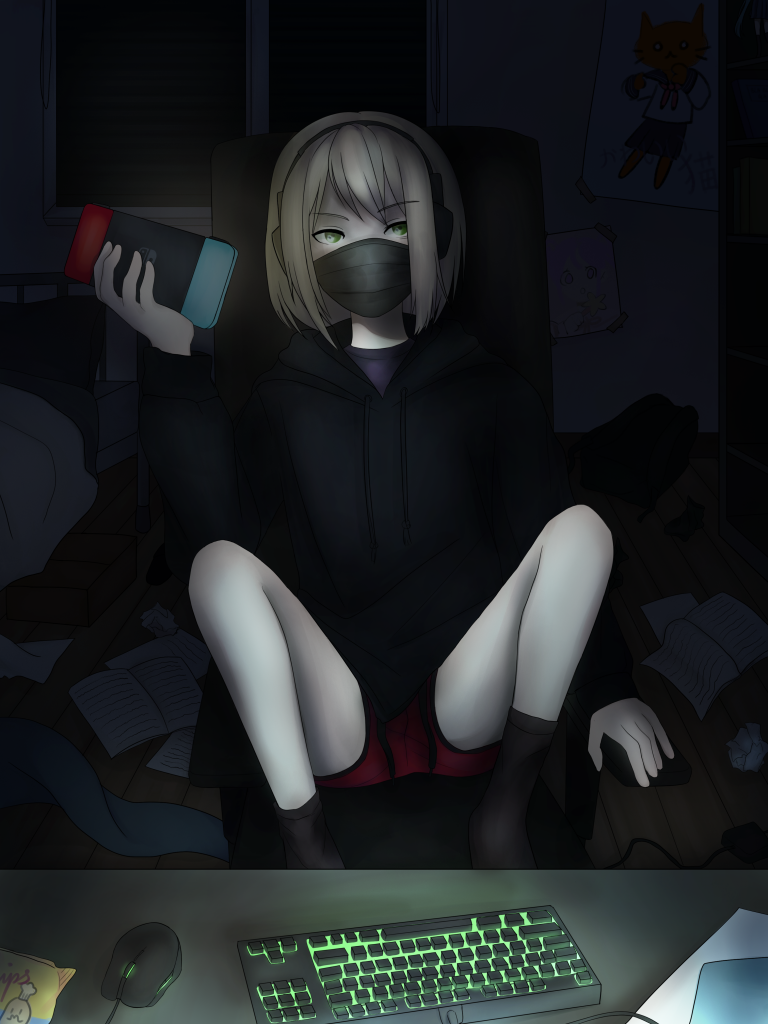
The Art Competition with the themes ‘Quaran-teen’ and ‘Technology’ attracted a variety of submissions. The results were judged by a panel of judges including ECP Staff and Marketa Vasickova, ECP Graduate of 2018 and student of University of Arts London, who congratulated all students for their work. She added: “I particularly appreciated that some students depicted this sense of a loss of personal connection in isolation, while others took a different approach and reflected on the positive consequences of isolation – such as the drop in pollution levels. With great work emerging from such a challenging time … it has become clear that art brings us together.”
Congratulations to all participants, organizers, winners or members of winning teams in all competitions.
In the Art Competition, 5 excellent works were chosen: 1. Shan Shan Chen (Y5) 2. Olga Kosjakova (Y4) 3. Sonya Kalinina (Y2) 4. Annabel Morrisova (Y3) 5. Elsa Srsnova (Y1)
Fred and Kristýnka, Student Council President and Vice-President
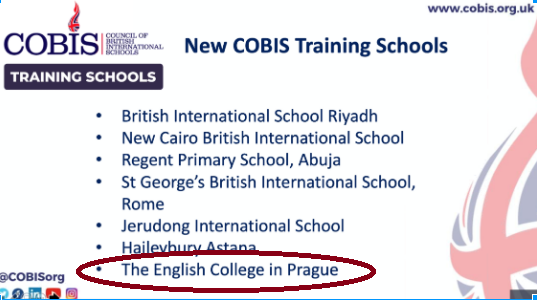
We are very pleased to announce that The English College in Prague has been selected as one of seven COBIS Training Schools after a competitive global application process. The Council of British International Schools (COBIS) is the premiere association of British schools of quality overseas. It is serving educational institutions around the world.
About the programme
The Training Schools programme was created “to enable schools to demonstrate the breadth and quality of their commitment to professional development,” according to COBIS. It focuses on career progression routes, initial teacher training and whole school workforce development. Training Schools serve as “regional hubs” for professional learning events and model best practice in the development of educators. COBIS also hopes the programme will help support the growth of the global teacher workforce in the long-term.
Dr Fiona Rogers, Deputy CEO and Director of Professional Development and Research at COBIS, wrote that The ECP promotes “good ideas backed up by enthusiasm, commitment of time and regular feedback to the SLT. As a small school, they are well on their way.”
Sharing with the community
The ECP has hosted a number of conferences over the past few years. They include events for the Association of Central European Schools, the Akademie věd ČR and WomenEdCzech. We regularly facilitate or partake in International Baccalaureate (IB) “job-alikes.” These allow subject teachers from across the region to share pedagogical knowledge. Other vocational workshops are provided as well, such as an evening on teaching English literature in Czech schools and sessions on Online Safeguarding.
Moreover, ECP staff have shared locally and globally in their areas of expertise. We have had individual staff members speaking at conferences, examining papers for the IB Programme, delivering webinars on learning management systems, writing for academic publications and more. The ECP staff is truly a community of lifelong learners.
Our approach to professional development
Our mission statement for professional development is “To celebrate, support and enhance the teaching and learning at The ECP.” The already-talented ECP staff continue to engage in developing their own and colleagues’ teaching. We have established a collaborative professional learning community that includes:
Evidence-based practice. Evidence from primary and secondary research is paramount in our decision-making process.
Analysis and evaluation. We evaluate the effectiveness of our own teaching and change and adapt based on what we find.
A culture of trust and risk-taking. This allows colleagues to continually hone what they do in a supportive environment that recognises diversity.
We actively encourage educational research and the promotion of new ideas. Staff have proposed and enacted language exchanges, a Year 6-to-Year 1 mentoring scheme, Science trips, community building days and more. For those who want to explore career progression, there is a shadowing scheme in place. Recently, staff have completed accreditation for the Induction for Newly Qualified Teachers (NQT) or the National Professional Qualification for Senior Leadership (NPQSL).
This COBIS Training Schools recognition affirms The ECP’s commitment to lifelong learning, innovation, and sharing our best practice locally and globally. More information on the Training Schools Programme is available here.
Emily Rankin, Deputy Head for Upper School/Teaching & Learning
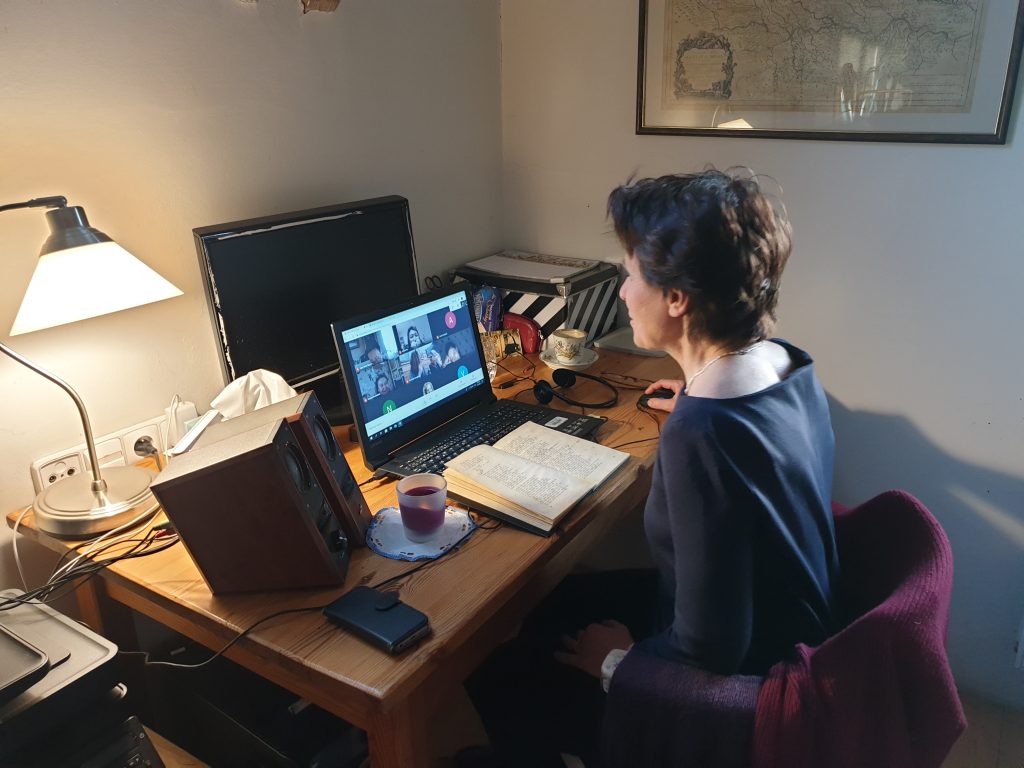
I’m sitting at my desk, looking into my computer – dressed up from the waist up, a dress and beads, there are flowers behind me on the ironing board and there is a candle next to me – and I have Mácha’s Máj book in black cover in front of me.
I have a feeling like I am about to maneuver a plane. It is easy to read the Máj poem on the Petřín hill and to speak to passers-by – but how will it work today? How will I connect with those who will be requesting to join? Will the little white flashing box support me or fail????
But we really have to read the Máj poem, the verses must be heard throughout Petřín as well as online. We must exclaim them into the world, we must not break the tradition.
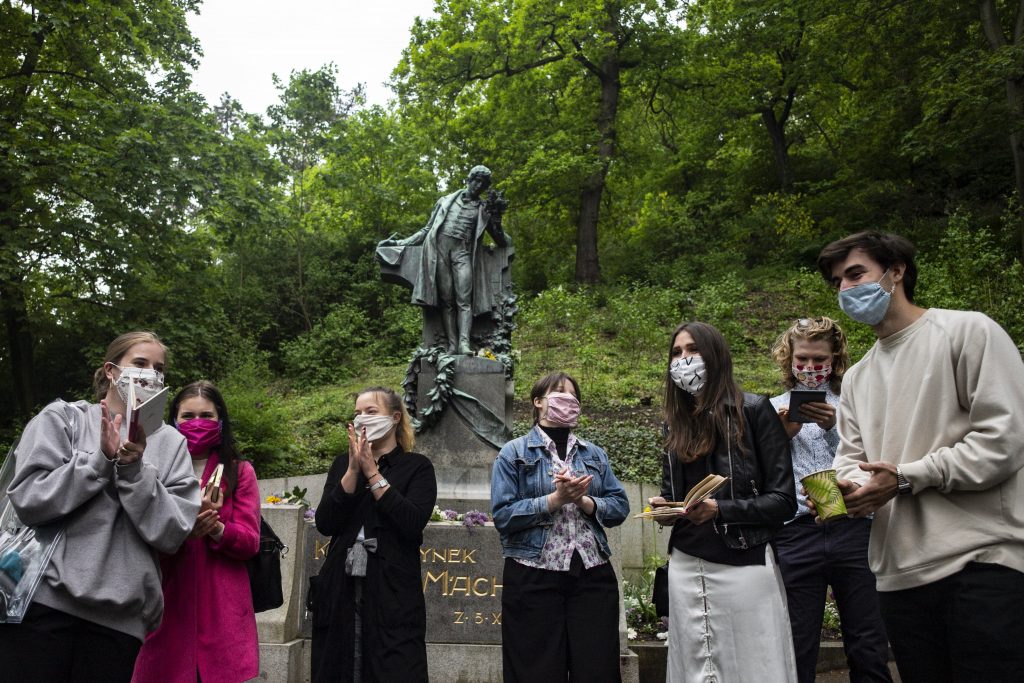
We have our connections on Petřín hill. ECP students are loyal and they mediate the view of Mácha’s statue at Petřín. Thanks to them, all the rest of us connecting over the internet can be there as well. There are other loyal students, current and former, and even one of our parents joining in online, just like my children and their child…
This year, the Máj reading is happening online – we can’t call people to assemble – what if more people come than it is currently allowed, but we had our links there! So we were able to go ahead: Long is my journey! Vain is all calling!
Alena Švejdová, Deputy Head Co-Curriculum, Teacher of Czech
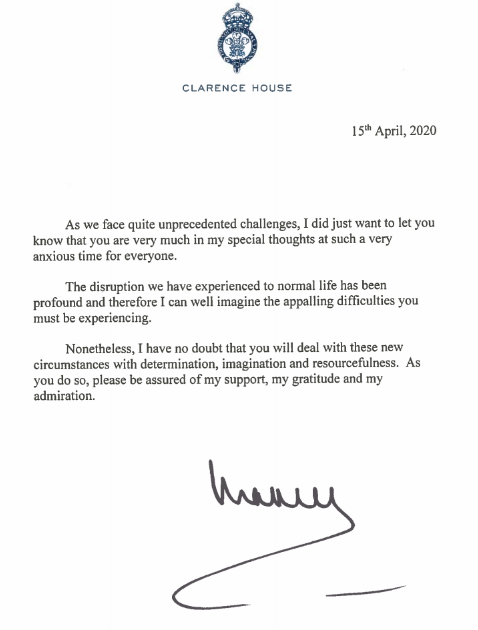
His Royal Highness The Prince of Wales is the UK Patron of the English College in Prague. Everyone at the ECP was very touched to receive this message from him, sending his best wishes. We are very grateful to Prince Charles for thinking of us. He has himself had Covid-19 and we are delighted that he has made a full recovery.
Founder Patron
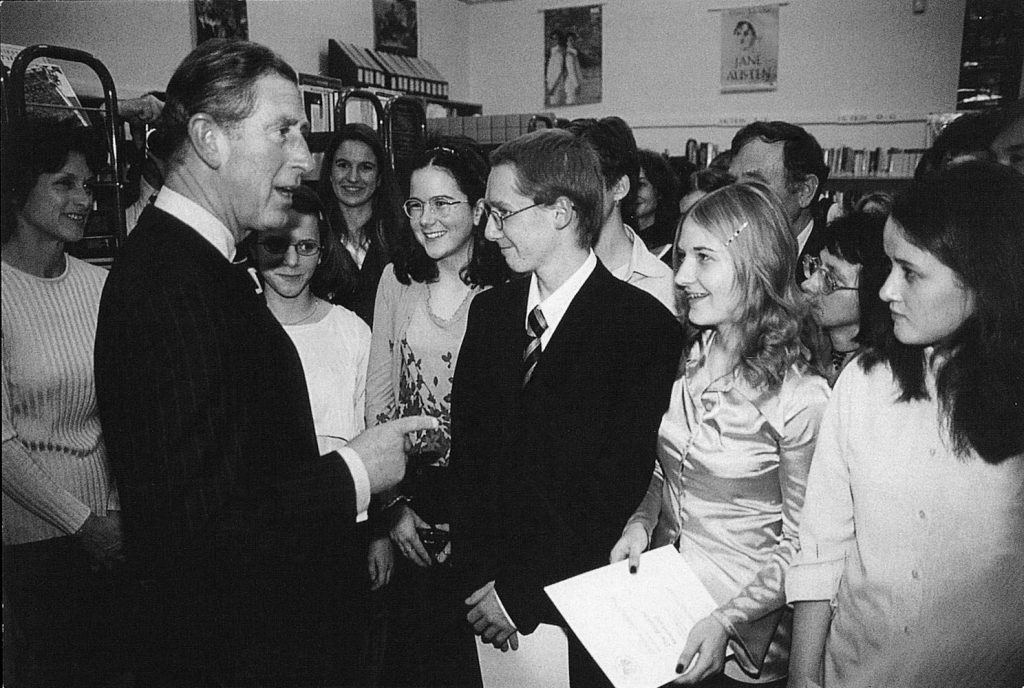
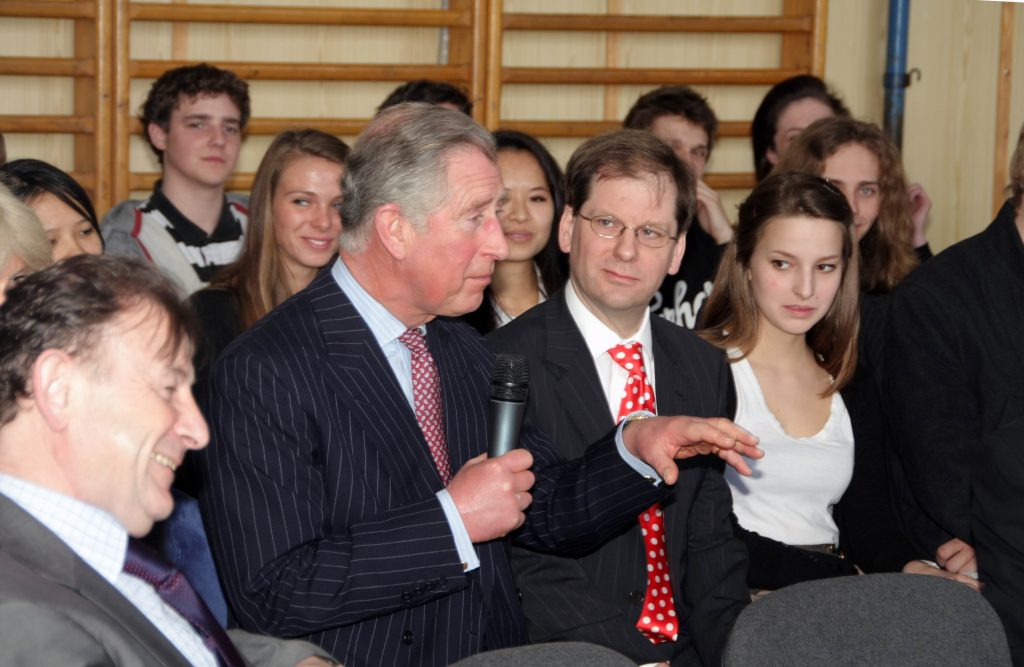
It was President Havel who asked Prince Charles to join him as a Founder Patron of the English College. Since the opening of the school in September 1994, HRH has visited the English College on two occasions. The first time was in October 2000 and he came to the ECP again in March 2010. Many teachers and former students have very happy memories of his visits and of the interest he has showed in the College.
Text of the message
As we face quite unprecedented challenges, I did just want to let you know that you are very much in my special thoughts at such a very anxious time for everyone.
The disruption we have experienced to normal life has been profound and therefore I can well imagine the appalling difficulties you must be experiencing.
Nonetheless, I have no doubt that you will deal with these new circumstances with determination, imagination and resourcefulness. As you do so, please be assured of my support, my gratitude and my admiration.
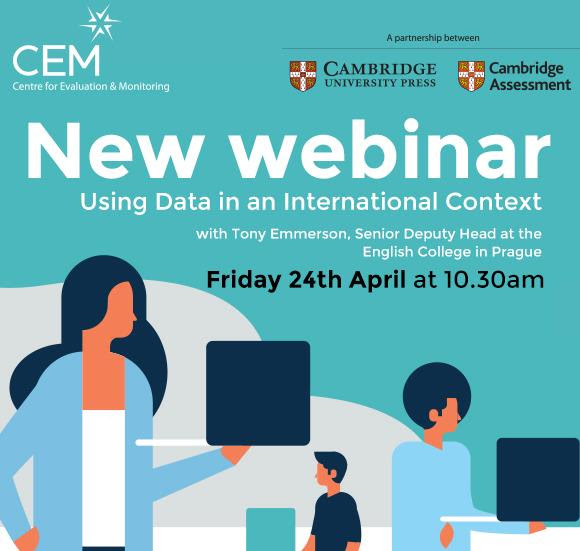
On Friday, ECP’s Senior Deputy Head, Tony Emmerson, will be leading a webinar for teachers. It is hosted by CEM, the Centre for Evaluation and Monitoring. CEM is a leading provider of assessments and data analysis tools to educational institutions around the world. Many of them are prestigious HMC schools both in the UK and overseas.
Tony will be sharing his expertise and ideas on how to use data to support students in the international context. The webinar is part of ECP’s commitment to being at the forefront of the international education scene, combining the best of both British and International education in our own unique way.
Tony is currently responsible for curriculum and assessment at the English College in Prague. He is leading the Heads of Faculty team, and supporting the Headmaster in his role of Senior Deputy Head. He is a firm believer in the evolving role of ICT in education, as a tool to aid learning and also to prepare students for professional life in the 21st century.
“Conventional classes will return, however, the impact of the online switch will endure. Students and teachers will have experienced a new benchmark of contemporary education: a more interactive, real-time and innovation-oriented learning experience.” Times Higher Education
The English College in Prague is heartened by our community’s extraordinary response to the current COVID-19 situation. In the face of an abrupt school closure mandate, our students and teachers were back in class, learning virtually, in under 48 hours. We held one day of staff training and produced remote teaching and learning guidance for ECP teachers and students, which continues to evolve based on our work with @GoogleForEdu and community feedback. In order to minimise disruption to our curriculum, classes follow their normal timetable, although in Lower School we have reduced lessons by 20% in order to curtail screen time and provide wellbeing programming.
We have made video and audio connectivity through Google Hangouts and Meet a priority as students have relayed that they appreciate the personal contact with their teachers. Tutors are regularly checking in with their tutor groups, and we get in touch with families if a student is not in their online lessons; pastoral care remains a prerogative. Our teachers are working fastidiously to provide engaging and robust learning experiences that involve student collaboration, real-world application, screencast presentations, etc. We have been speaking to school leaders in Asia and the UK, and we have shared our resources on e-learning and wellbeing on social media in the hopes that they will be of help to others in our global community.
Both parents and students, via email and a recent survey, have given positive and supportive feedback on our e-learning programme. Some of the anonymous comments are as follows:
What are students of The English College in Prague saying about their current e-learning?
“Teachers giving us as much help as possible.”
“I think the teachers are very understanding and I wanted to mostly thank everyone for doing such a good job at trying to make us feel comfortable during lesson time and out of lesson time.”
“The materials provided by the teachers are easily accessible. Also we can ask a question even if the class is not in progress.”
“Overall, I really like the scheduling that we still have the subjects and we do work. Also the calls are working very well if the microphones are off and only the teacher is talking.”
“Every teacher is open to suggestions how to make things work better and also everyone including students have been trying very hard so far to make things work, so honestly if it continues going at this rate I will not feel that we’ve missed much content.” Source: Student E-Learning Survey results 18/3/2020
e-Learning Experiences – Expressions of Appreciation from Parents:
“Thank you. Thumbs up for on-line teaching setup! Best regards We keep our fingers crossed.”
“Thank you very much for handling the situation with such a high level of professionalism and human attitude. With deep respect and thanks”
“I was present during a few of the lessons and I was very pleasantly surprised how not just my daughter, but also other students work nicely and responsibly. Let’s cross fingers so that everything returns back to normal as soon as possible. Wishing you good nerves and a lot of strength to all teachers and everyone who forms the wonderful support in the background.”
The Ministry of Health of the Czech Republic has ruled in accordance with the Public Health Protection Act in effort to prevent the danger of rise and spread of the COVID-19 disease that starting 11 March 2020 all schools must be closed. In line with this measure, the English College in Prague is closed to students from this date as well and we will keep you informed regarding re-opening as soon as directed by relevant authorities.
From Thursday, 12 March 2020, lessons continue remotely online using Google Suite applications. Teachers deliver their lessons as normal according to the timetable and assign work via Google Classroom. Students are expected to be online during the lessons, check their emails regularly and continue with their education.
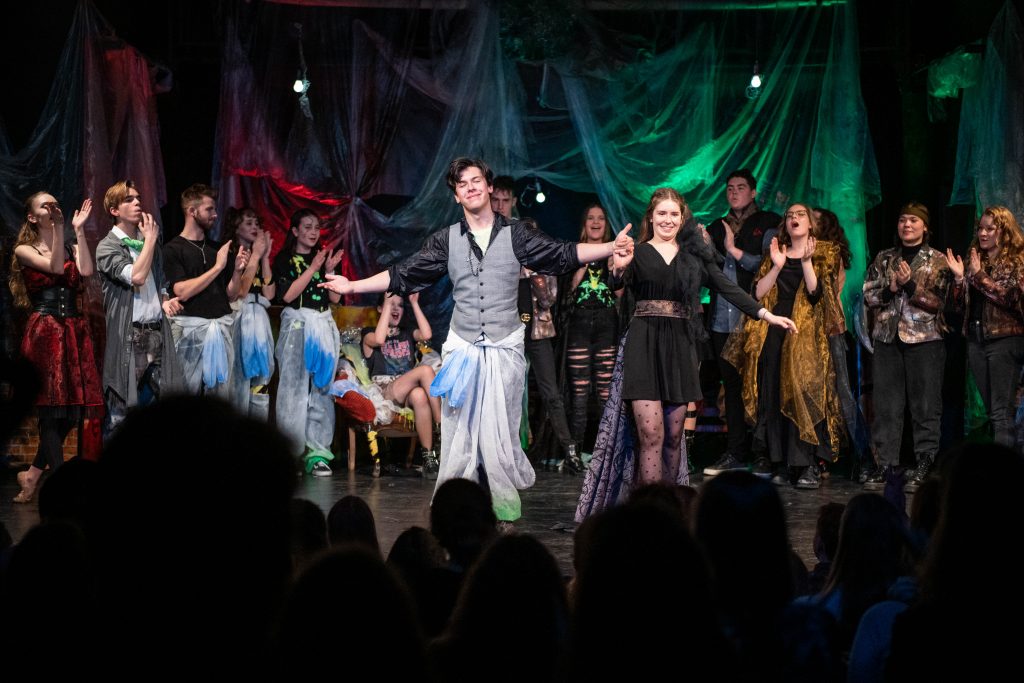
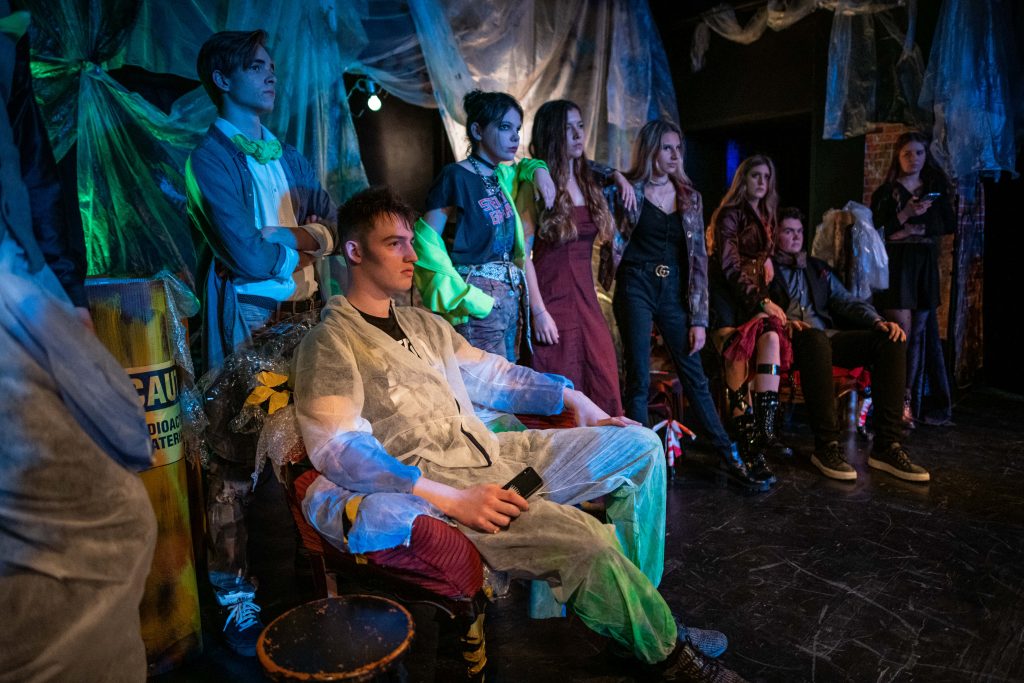
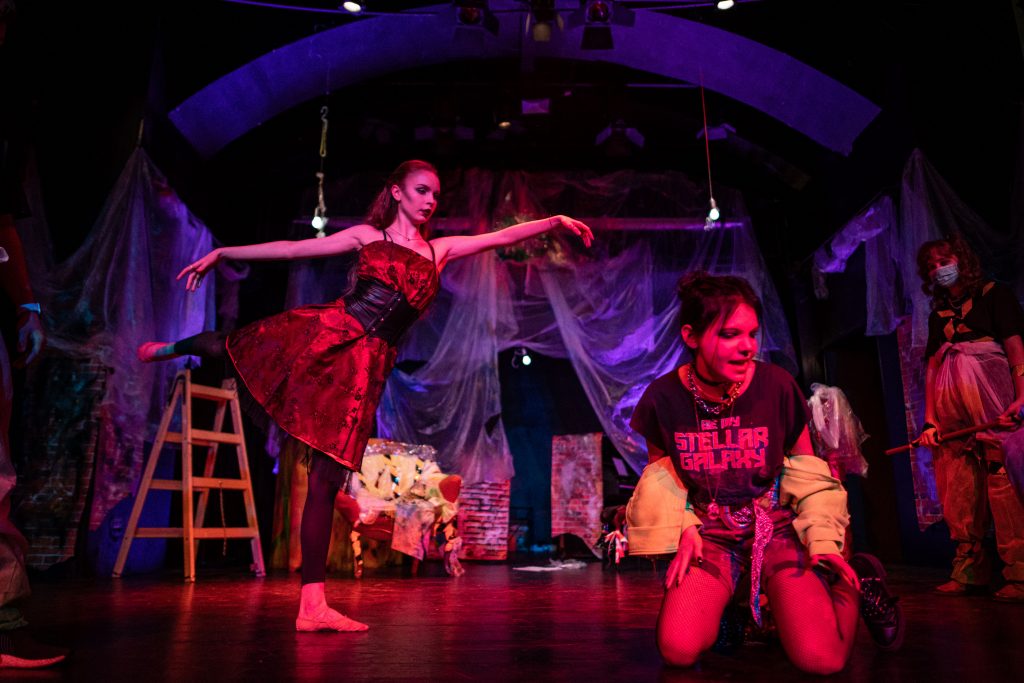
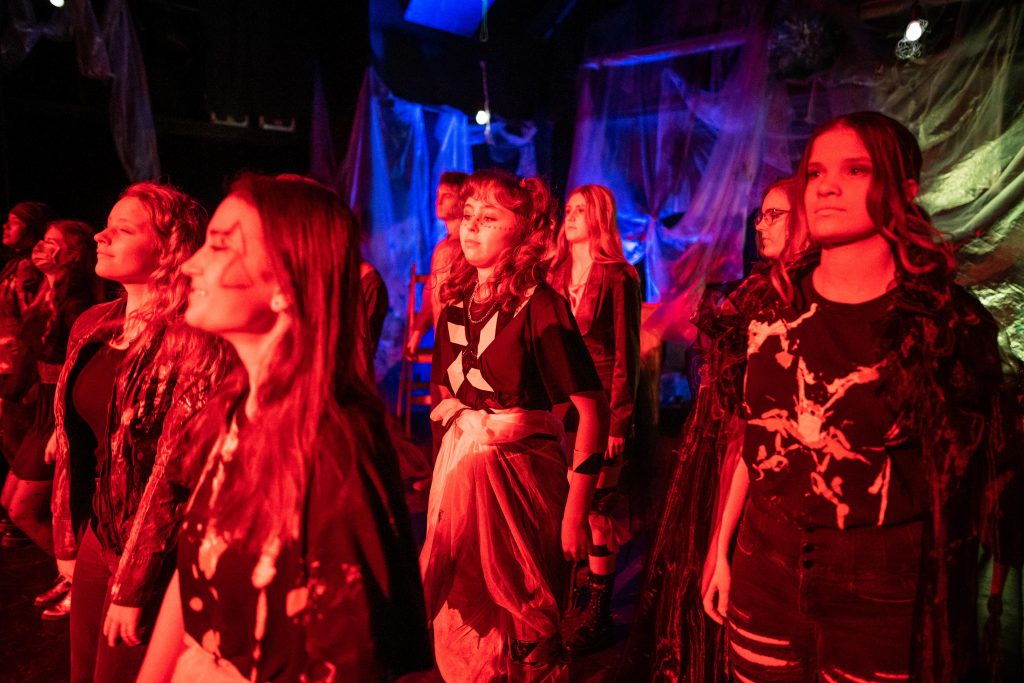
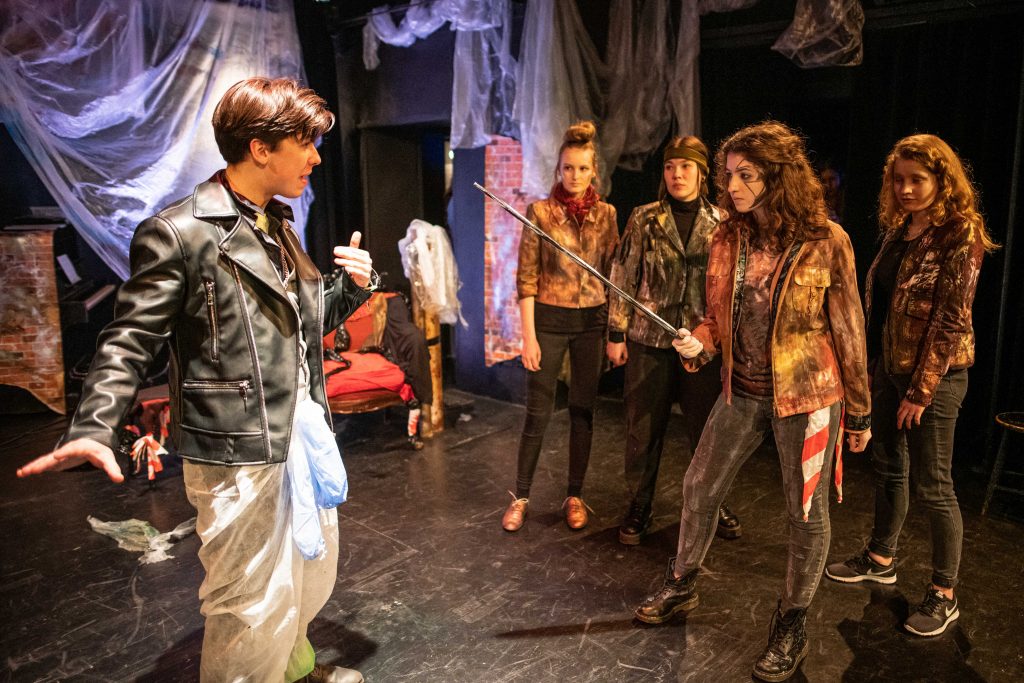
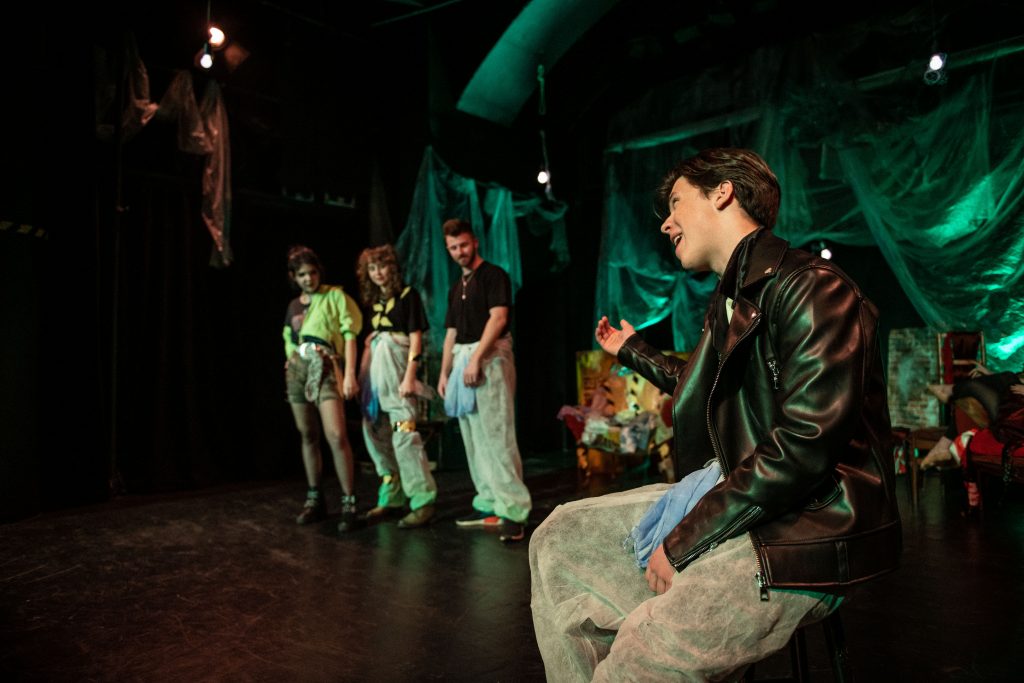
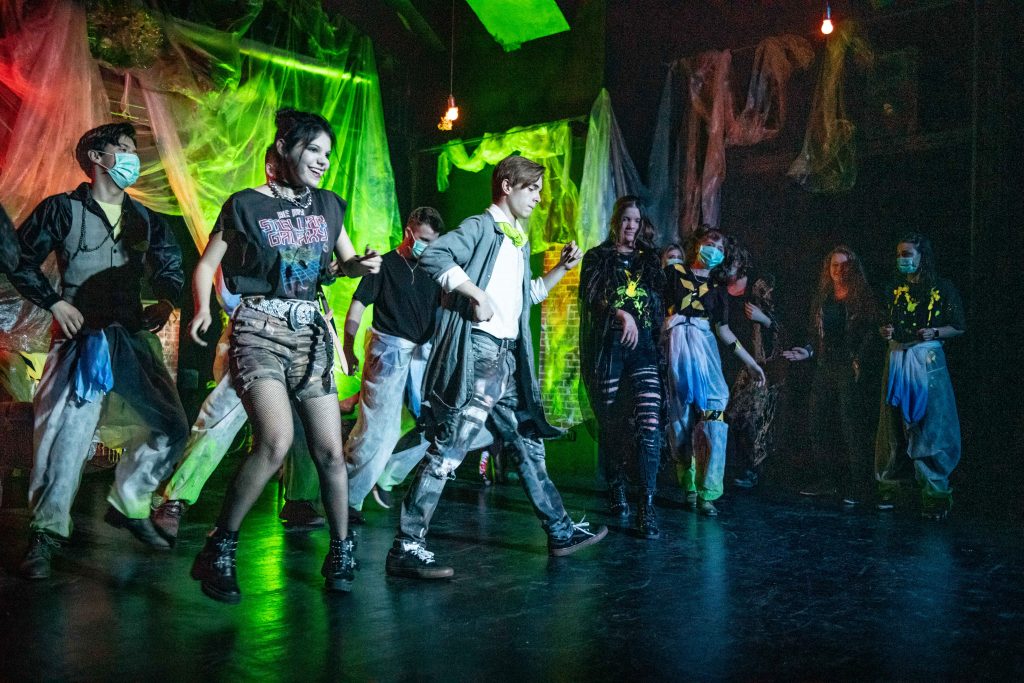
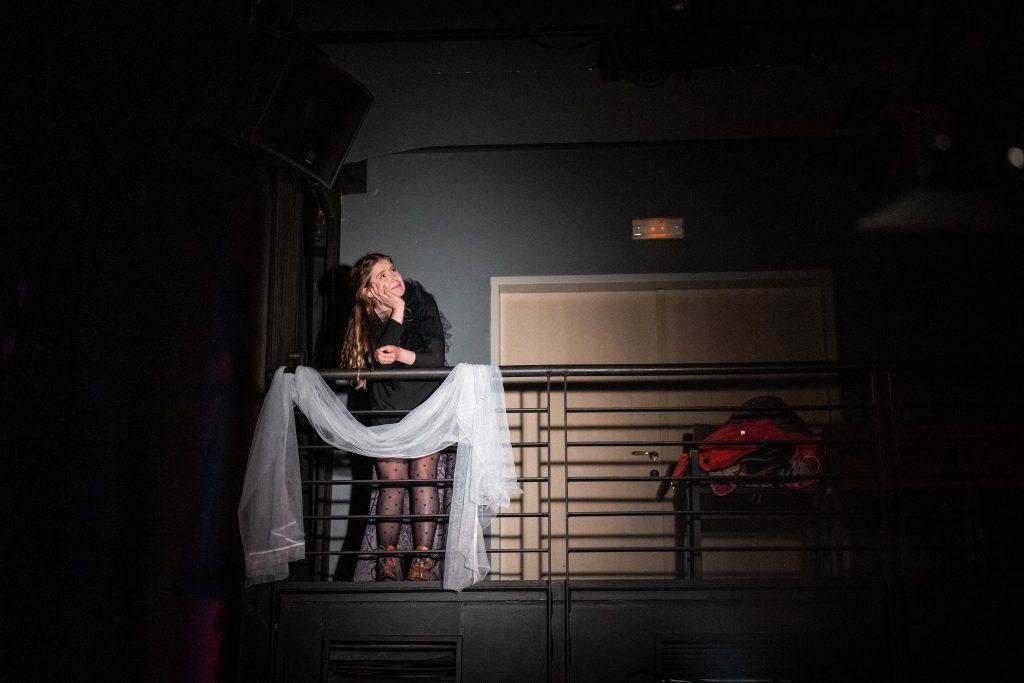
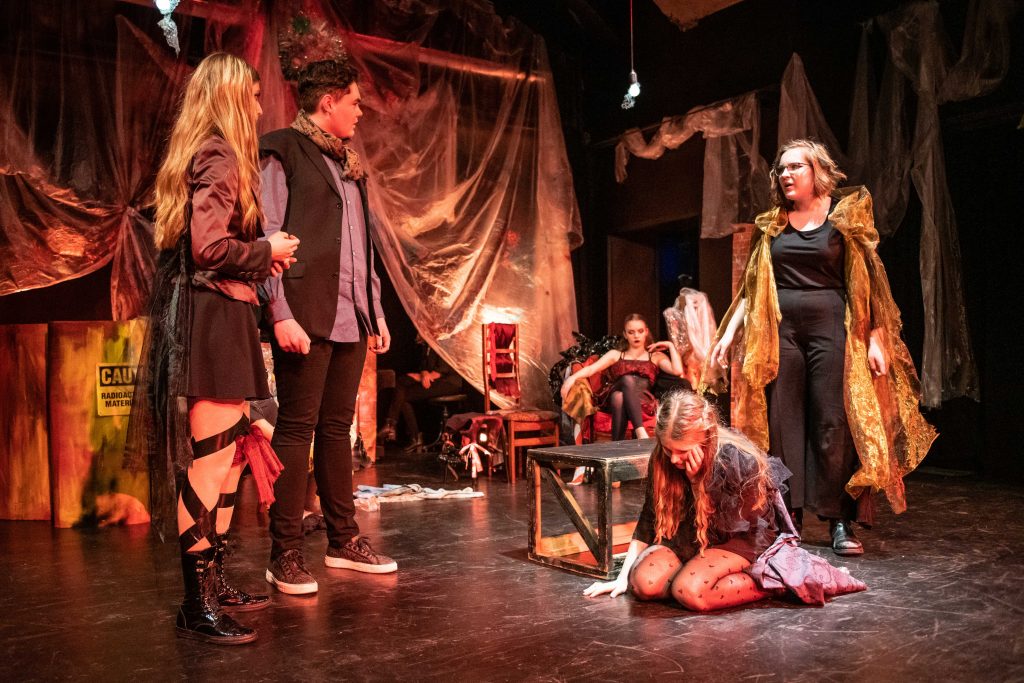
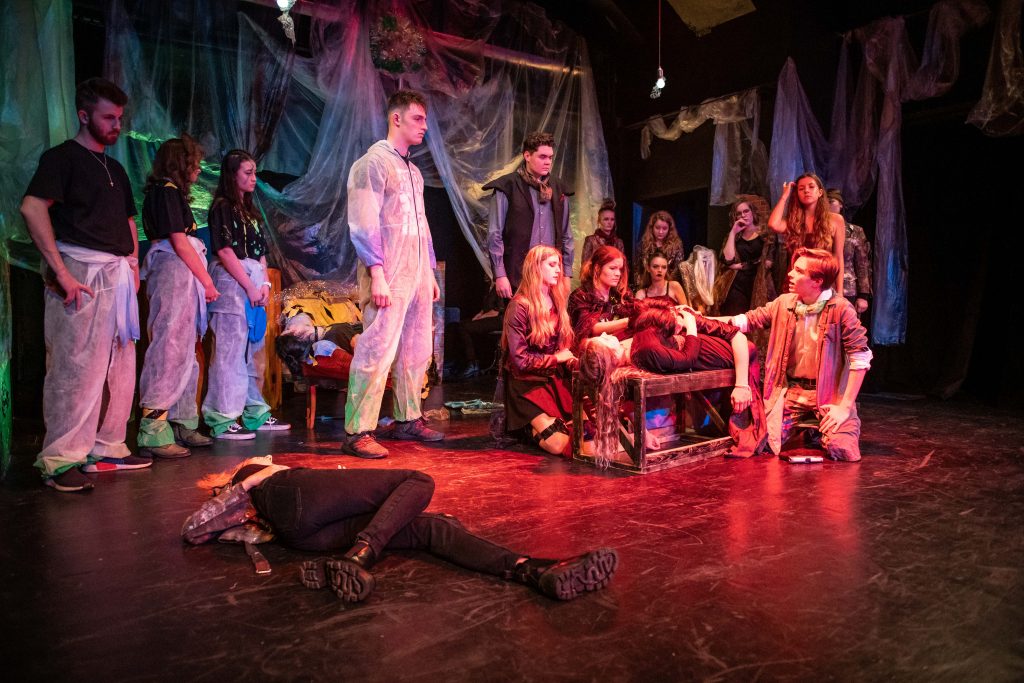
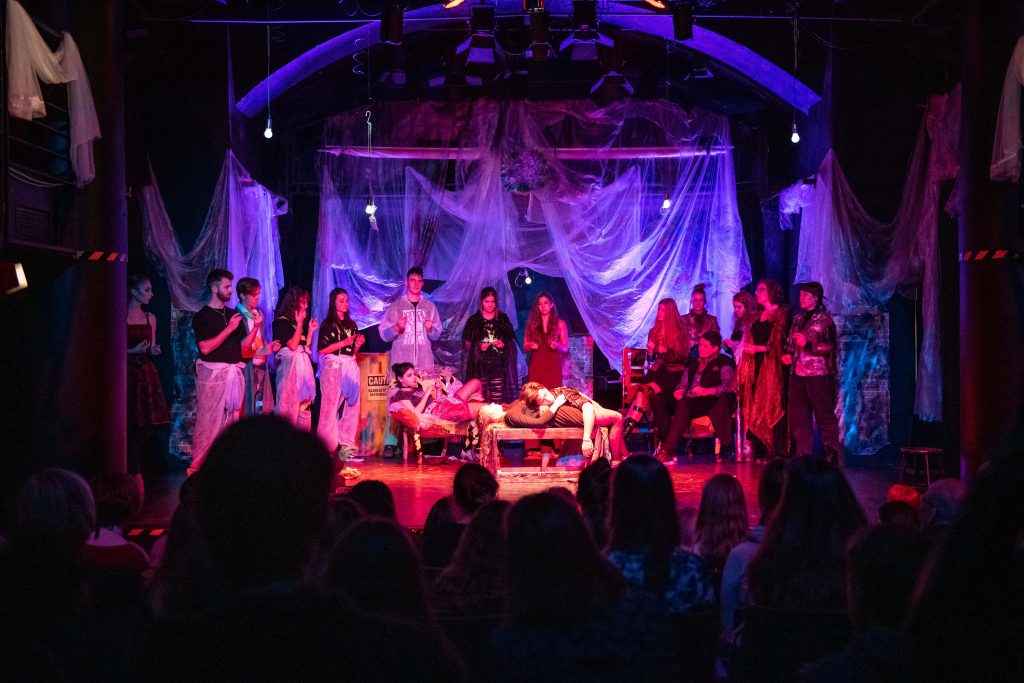
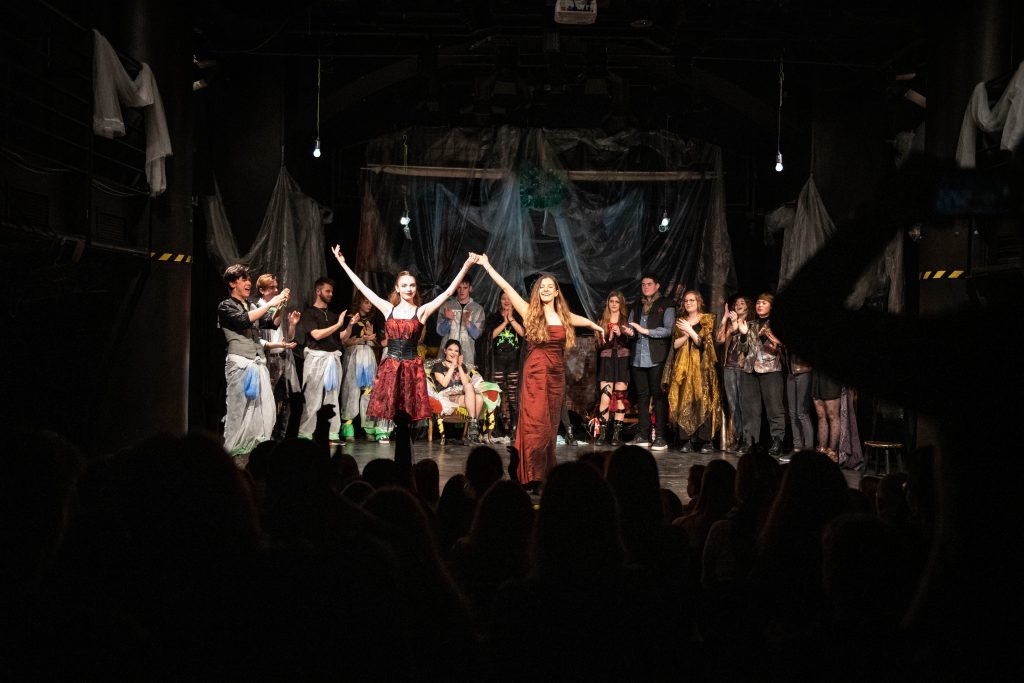
Kind thanks from the Arts Faculty to all students involved in the Romeo & Juliet production, and to all who came along to support. This was a combined creative effort involving Drama, Dance, Music and the Visual Arts, with a number of students active either as performers, musicians, costume designers or set designers.
Based on recent school cross curricular themes of the environment and technology, we explored the characters of Romeo and Juliet in a post apocalyptic world with an uncertain future. Our hope is that by creatively re-interpreting the historical text through a variety of art forms our students gain knowledge and insight of how to use the Arts to explore these themes, alongside the development of valuable 21st century transferable skills, such as collaboration, confidence, imagination, innovation and risk taking.
Romeo & Juliet – what could possibly go wrong?
Take as many Year 4 Drama students as you can get away with, add some enterprising Art students, and a liberal sprinkling of choral enthusiasts, let the dancers in….
It seemed a daunting prospect – all those lines to learn, dance moves to choreograph, props to create, costumes to design, songs to rehearse – apocalyptic indeed! Could ECP really pull off a Shakespeare play? Would the audience understand?
Experience dictates that the more people and aspects involved in a project, the more scope for things to go wrong. Fortunately, the production of Romeo and Juliet by so many of our classmates at the English College in Prague was not the case. The acting was, in general, pretty good and it was inspiring to see some new faces making their acting debut. Yes, some lines got missed, mumbled or messed up but come on, this is Shakespeare – not exactly everyday stuff. The show went fine and although not many would claim to have understood all the lines, we grasped how the story and individual characters developed.
Highlights
The design of the play was brilliant – the Art Department’s close attention to detail was noticeable, as were the costumes. The throne zones of the two houses, Capulets and Montagues occupying different sides of the stage was a very nice touch adding to the tension between the two rival families. Arina’s poise and Bibiana’s absolute stillness were a skillful supplement.
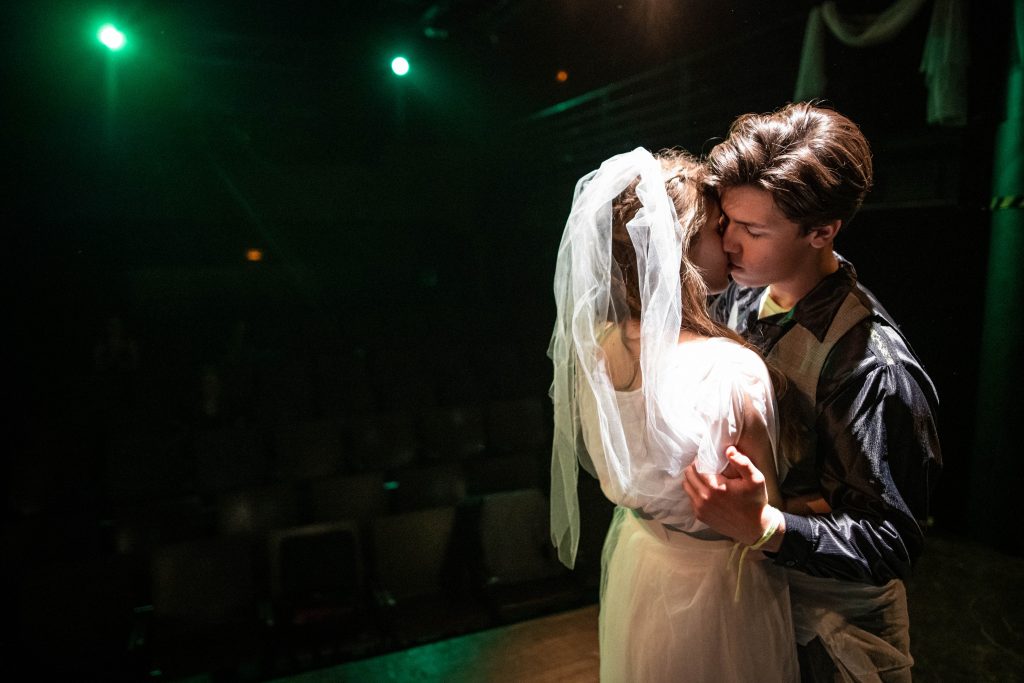
Both the music and the dance scenes made a great impression and the audience was appreciative of that. In fact, we wanted more! Couldn’t we have been treated to another routine in the second half? The Fight song was rousingly motivational but perhaps a more energetic and violent song would have conveyed the mood more appropriately. We loved the simple but so effective sound-compilations that the cast produced using just their hands as musical instruments – it made for a magically moody finale. Scenes and acting that stood out for us were Nicholas Roussouw as Friar Laurence, Bibiana Nesvadbová’s monologue and the sensational scene as Romeo’s lips met Juliet’s sending a buzz of electric tension whistling through the audience. Training the fight scenes paid off as resounding thwacks, whacks and smacks reverberated from the stage.
So we would like to congratulate the ECP Drama, Music and Art Departments for putting together a wonderful performance which was very unique in its presentation. It was most entertaining to see a traditional Shakespearean play done in such a different, yet entertaining way.